CHAPTER TWENTY-EIGHT: A CHIEF WITHOUT A ROOM
Richard Sterling watched the transit meeting on a local news replay from the small apartment he was renting outside Crestwood.
His attorney had advised him not to speak publicly about the pending proceedings.
The advice had not stopped him from watching every report or trying to determine who was talking to investigators.
When the camera showed Bradley Hayes sitting in the audience, Sterling leaned forward.
“That boy doesn’t know when to quit,” he muttered.
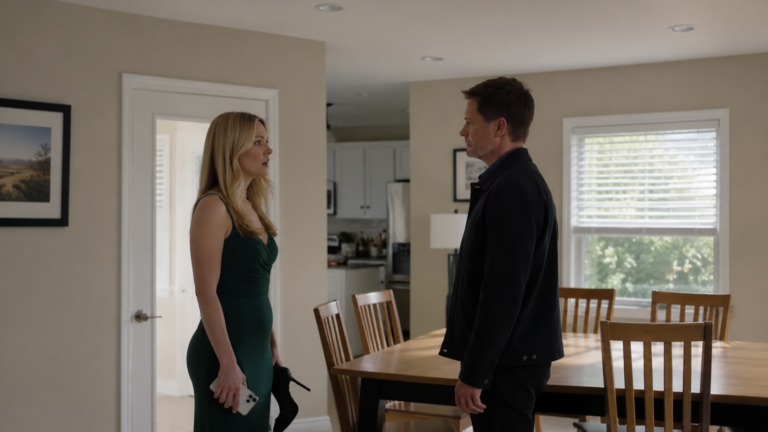
His sister, Lorraine, was visiting to help him organize a collection of household boxes.
She heard him and turned off the television.
“You need to stop calling him a boy.”
Sterling stared at her.
“He was my officer.”
“He is a man who saw something you did.”
“You don’t know what policing is like.
”
“I know what it is like to be frightened by someone who expects you to obey.”
Sterling reached for the remote.
Lorraine kept it in her hand.
“You called me because you wanted help finding a place to stay,” she said.
“I came because you’re my brother.”
“Then act like it.”
“I am.”
Her voice remained level.
“I won’t help you pretend every person who questions you is part of a plot.”
Sterling looked away.
He had spent fifteen years occupying the largest office in a building where other people waited outside his door.
Now his attorney scheduled his conversations, his badge was secured elsewhere, and people he once summoned would not return his calls.
The change enraged him more than he wanted to admit.
“They’ll have to prove it,
” he said.
“Yes,” Lorraine replied.
“And you will have to answer the questions.”
Two days later, Sterling’s disciplinary hearing began in a municipal facility away from the police station.
The hearing officer outlined the allegations and reminded everyone that the proceeding had its own standards and was not the federal trial.
Witnesses described supervision decisions, missing documentation, and the handling of complaints.
Sterling’s counsel challenged inconsistencies and argued that some decisions had been approved by city leadership.
Several disputed matters remained unresolved after the first session.
The hearing officer scheduled additional testimony rather than announcing a verdict for the afternoon news.
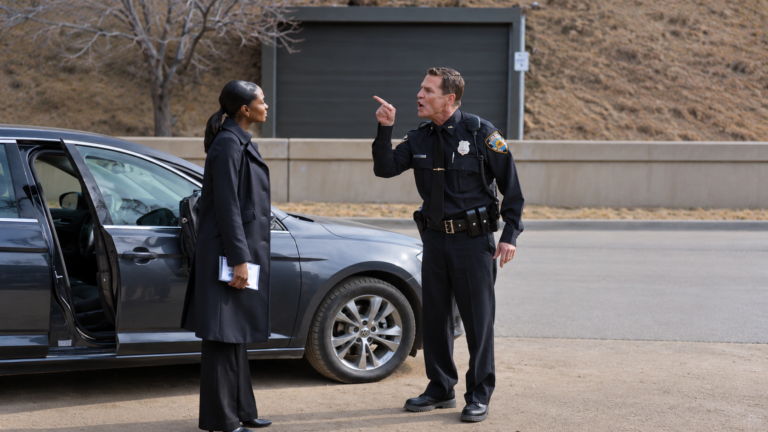
Outside, Sterling walked toward his attorney’s car and stopped when he saw Hayes across the parking lot.
For a moment the two men looked at each other.
Sterling opened his mouth.
His attorney stepped between them.
“Richard, we are leaving.”
Sterling closed his mouth and got into the car.
Hayes watched it pull away.
He had expected to feel satisfaction at seeing his former chief unable to command the scene.
Instead he felt the weight of every conversation he had postponed while wearing the uniform.
He walked back inside to finish the statement he had come to give.