That small change mattered because it acknowledged the building’s unfinished obligations.
Owen spoke about the proposed closure of the footpath beside our apartment.
He explained that students used it to reach the bus stop and that the alternative added nearly a mile to their walk.
The official asked the planning department to review pedestrian safety before making a final recommendation.
Nobody cheered when the hearing ended.
There was no dramatic verdict and no sudden collapse of Rusk’s empire.
Yet the plan could no longer proceed as though the people living beside it were invisible.
Arthur gripped my shoulder as we left and said progress sometimes sounded like an official asking for one more document.
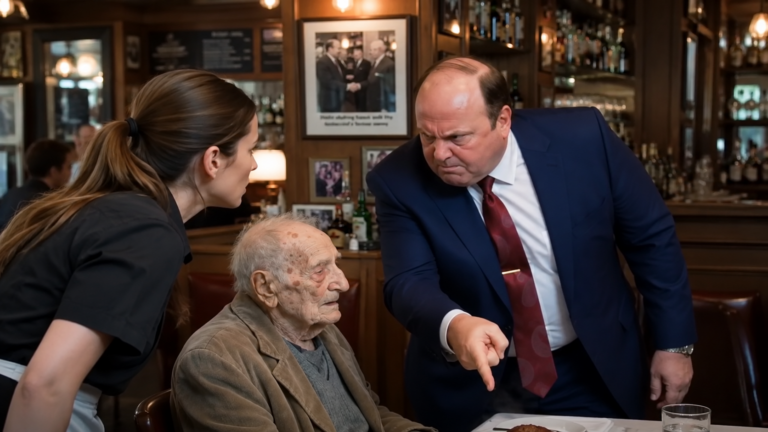
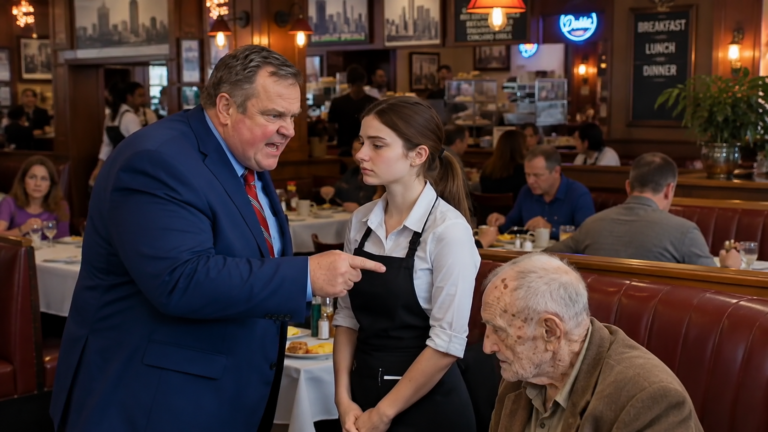
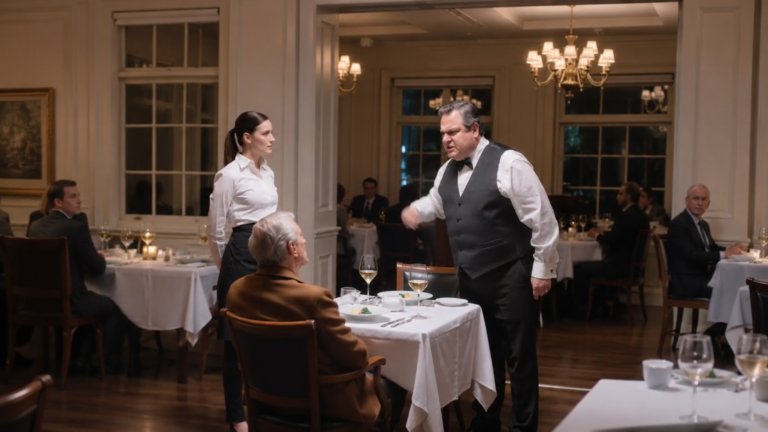
I remembered the way Rusk had panicked at table nine and wondered whether he had feared exactly this slow, public attention.
Chapter 15: The Woman in the Ledger
A former partnership administrator named Helen Duarte contacted Miriam three days after the hearing.
She said she had maintained a ledger of community benefit requests before leaving her job the previous year.
Helen agreed to speak only after receiving an explanation of how her information would be used.
Miriam arranged a meeting with an independent accountant who could evaluate the documents.
I attended because Helen recognized me from the restaurant video and asked whether I was willing to describe what happened.
Her office had been a narrow room overlooking the construction site.
She remembered elderly residents who came upstairs carrying prescription bottles and asking when the clinic would reopen.
Her instructions had been to redirect them to a telephone line that rarely answered.
Helen said she began documenting complaints because she could not bear to tell people the same uncertain story.
The ledger included requests for transportation, assistance with rent, and reimbursement for services that had been promised but never delivered.
It also contained approval codes whose meaning she did not understand.
The accountant examined several entries and warned us against treating internal labels as evidence of wrongdoing without supporting invoices.
Helen agreed and offered to explain the procedures she had followed.
She described a meeting at which Rusk’s financial director said the charitable obligations needed to be streamlined for investors.
Miriam asked whether the director had ordered any false entries.
Helen said she had never heard that instruction.
Instead, she said employees had been encouraged to define future commitments as current benefits whenever accounting guidance allowed it.
The accountant explained that even technically permissible reporting might be misleading if it contradicted the trust agreement.