The black Chevrolet Tahoe crossed the center line at 11:47 on a rain-soaked Thursday night, and Deputy Owen Mercer knew he could not pretend he had missed it.
He had been following the vehicle for almost two miles through the dark hills outside Briar County, Virginia.
The Tahoe carried government plates, tinted windows, and a narrow antenna that bent backward in the wind.
Its driver had slowed at every intersection, as though searching for a particular road rather than trying to reach a destination.
When it drifted across the yellow line a second time, Owen switched on his emergency lights.
The Tahoe did not immediately stop.
It continued another quarter mile, passed a shuttered gas station, and finally pulled beneath the broken floodlight of an abandoned produce warehouse.
Owen parked behind it with his front wheels angled toward the shoulder.
He told dispatch his location and read the plate number aloud.
Dispatcher Nora Bell hesitated before answering.
She said the registration system had returned an administrative restriction instead of a normal owner record.
Owen asked whether the vehicle was reported stolen.
Nora said she could not determine that from the information available.
The rain tapped against his windshield while he studied the dark rear window.
He had served the county for fourteen years, long enough to understand that a restricted plate did not give a driver permission to endanger people on a public road.
He stepped out into the cold and approached from the passenger side.
The Tahoe’s engine idled with a low, steady rumble.
Inside, a woman sat alone behind the wheel, her hands visible at ten and two.
She looked to be in her late fifties, with silver hair pulled into a severe knot and a dark coat buttoned to her throat.
There was nothing theatrical about her expression.
She looked tired, alert, and profoundly unsurprised to see him.
Owen introduced himself and explained why he had stopped her.
The woman nodded once and lowered the window another inch.
She said she had been looking for the county medical center and had missed the turn twice.
Owen pointed out that the medical center was twelve miles east, not west.
The woman glanced at the empty road behind him.
She said she had received conflicting directions.
Owen requested her license and registration.
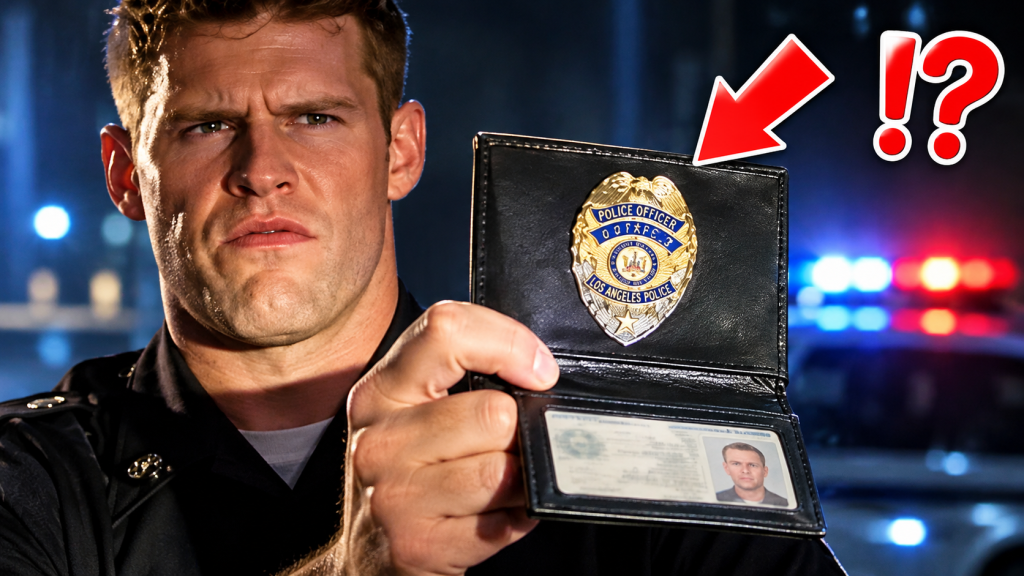
She reached into her coat slowly, produced a leather identification wallet, and held it open where his flashlight could reach it.
The photograph matched her face.
The name beneath it was Evelyn Ward.
Under the name was an office Owen recognized from years of television coverage and congressional hearings.
The credential identified her as the Inspector General of the Department of Homeland Security.
For a moment he wondered whether he was looking at an elaborate forgery.
Then he noticed the expiration date, the security printing, and the small scratch beside the photograph.
More troubling than the title was the name itself.
Evelyn Ward had been declared missing six days earlier.











