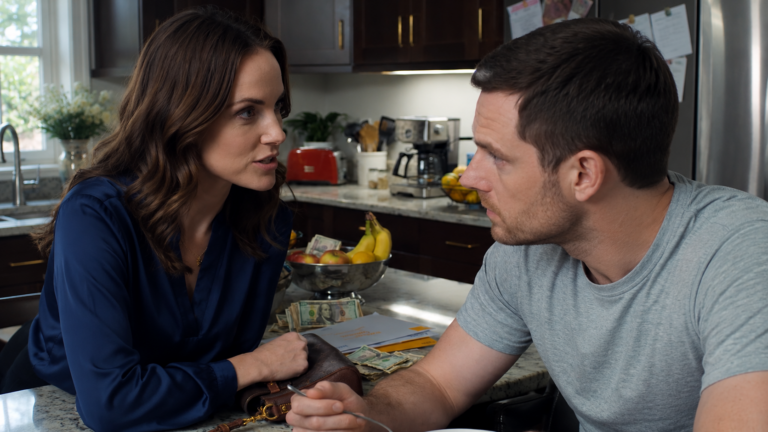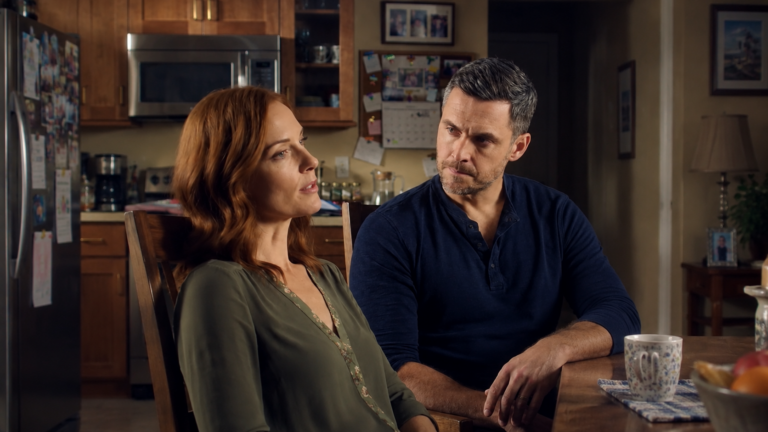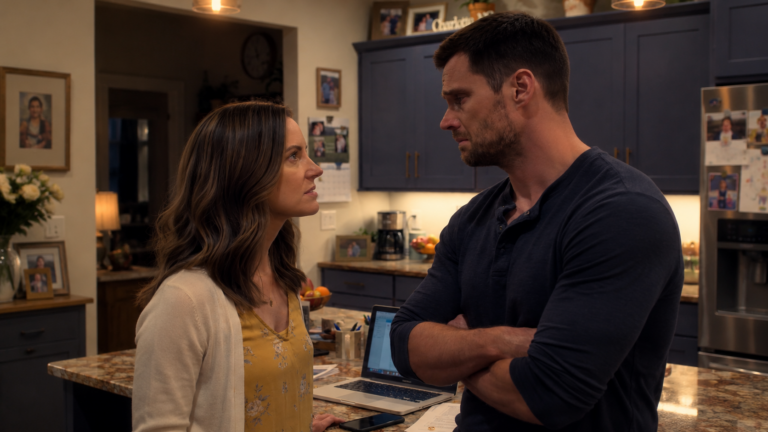
Lauren expected an argument when she announced she was going out with her ex.
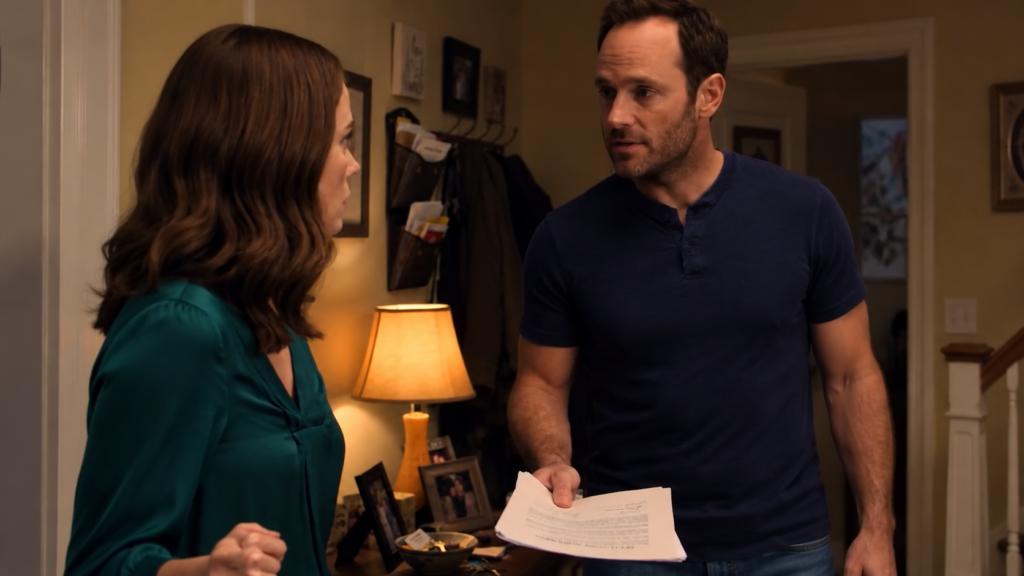
Instead, her husband held out a separation agreement.
“Before you leave, sign this.”
Her hand froze on the doorknob. A drop of rain made a dark spot on the cuff of her gray coat. She had been rehearsing an entirely different confrontation during the twenty minutes she spent upstairs pretending to look for her earrings. She expected Owen to demand names, dates, explanations. She expected him to ask her to stay. A small, ugly part of her had wanted that, because then she could call his protest controlling and step through the door with a clean conscience.
“What exactly am I signing?”
“A separation agreement.”
The smile vanished. Owen laid the pages on the entryway table, beside the bowl containing loose change and the brass keys to their garage. He was wearing the green sweater she had given him three Christmases ago. That detail unsettled her more than his tone, which was so measured it sounded almost borrowed.
“For weeks,” he said, “you’ve hidden messages, turned your phone over at dinner, and told me you were meeting women from work. You decided tonight you could stop pretending. Fine. But you don’t get to keep me in the marriage while you find out whether you want somebody else.”
Lauren stared at the second page. Owen had already consulted a lawyer three days earlier. He had drafted temporary arrangements for the mortgage, their shared savings, and the small upstairs room where she kept her sewing machine. He hadn’t asked for a divorce yet. There was room for discussion. That should have softened the shock, but it didn’t.
“Three days?” she whispered. “You saw a lawyer three days ago?”
“You were in the shower. Your phone lit up on the counter. ‘Can’t wait to see you Friday. Same place?’ I didn’t go through anything. That one sentence was enough to tell me I needed advice.”
“You don’t know what that sentence means.”
“Then tell me.”
She should have. Later, Lauren would identify that moment as the last ordinary opportunity to speak honestly, before an unfamiliar woman’s name made the conversation impossible to simplify. She could have explained where she was going, why she had renewed contact with her former boyfriend, and what she had been saying to him about her marriage. The explanation would have been shameful, but at least it would have belonged to her.
Instead she said, “I told you I’m going out with someone I used to love. I’m not asking permission.”
“I know.” Owen moved a pen toward her. “I’m not giving or refusing it.”
Her phone buzzed inside her coat. The message came from Reid Mercer, the man she had dated at twenty-three, the man whose certainty once looked like courage and now looked, depending on the hour, like a way out. The text said: Don’t walk in through the front. Use the side entrance. I have a surprise.