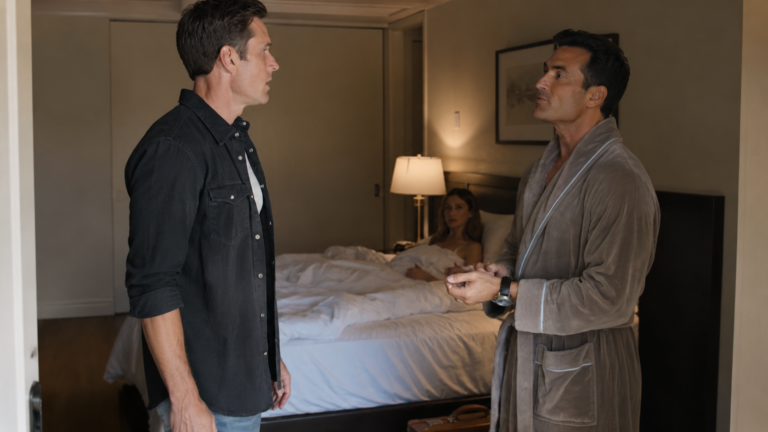
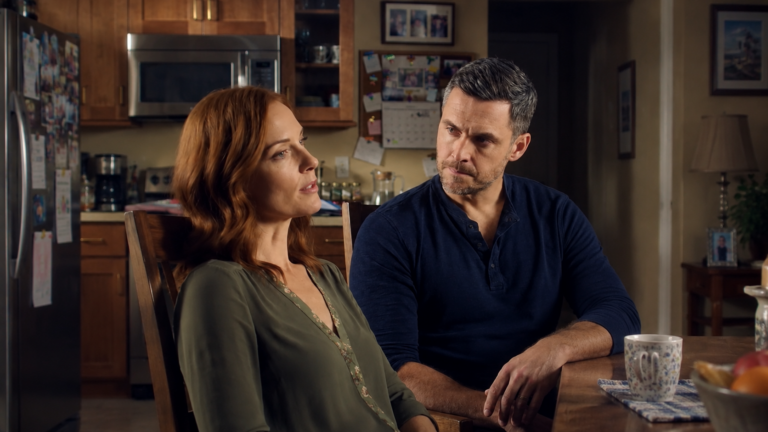
Owen set his mug down. “I knew you were unhappy. I didn’t know you were treating our marriage like a story you needed somebody else to rescue you from.”
Lauren started to object, then stopped. Reid had repeatedly described himself as the one person who saw her clearly. That idea had flattered her precisely because it spared her from the work of speaking plainly at home. She had allowed herself to believe that being understood by someone who called every evening was more meaningful than making herself understood by someone who lived beside her.
Megan’s own story was less tidy. She and Reid had married nine years earlier when his second restaurant was failing. She had trained as an accountant but spent six years handling schedules, vendors, and payroll while he pursued new concepts. The restaurant survived, and Reid gradually began describing himself as the visionary who had carried it through disaster. She had let that pass because correcting him in public always became a fight at home.
“A year ago,” Megan said, “I told him I wanted to go back to work outside the business. He said of course. Then every time I scheduled an interview, something urgent happened at the restaurant. A refrigerator failed. A delivery didn’t arrive. Someone needed payroll fixed. I kept choosing the immediate problem. That’s my part of it. I should have stopped choosing.”
“Do you want to leave him?” Lauren asked.
“I haven’t decided. But I am not helping him put you on display while he asks an audience to applaud him for having rediscovered romance.”
At seven-fifteen, Reid sent Lauren a photograph of a closed side door decorated with white flowers. Underneath he wrote: Trust me, tonight changes everything.
She showed it to Megan, then Owen. Megan closed her eyes briefly. “Those flowers were ordered for my birthday last month. He told me the florist lost them.”
The table went silent.
Owen looked at his wife. “You can still stay here. He doesn’t need an audience, and you don’t owe him an explanation tonight.”
“I owe him a refusal,” Lauren said.
“You can send it from this room.”
“He can still tell those people whatever he likes. Some of them paid to hear me speak. If I don’t show up, he’ll say I lost my nerve.”
Megan looked at her carefully. “You’re thinking about how he will describe you. That’s how this works. He makes the story seem more important than the choice.”
Lauren took a long breath. “Then we don’t give him a scene he can sell. We tell the staff the truth before the guests arrive. We ask for the microphones to be switched off. And we let people leave.”