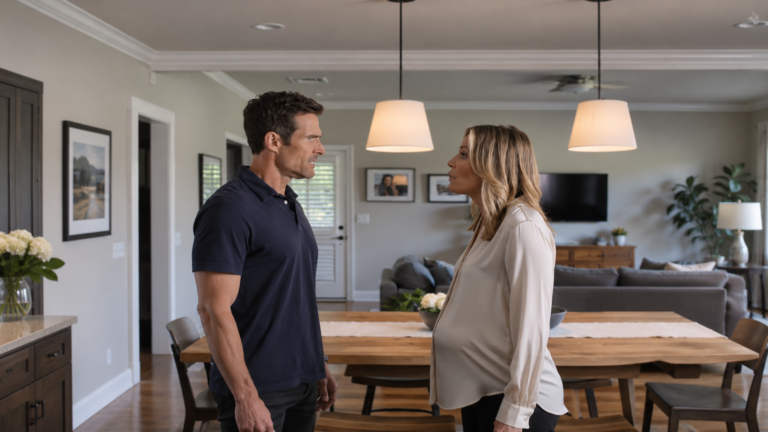
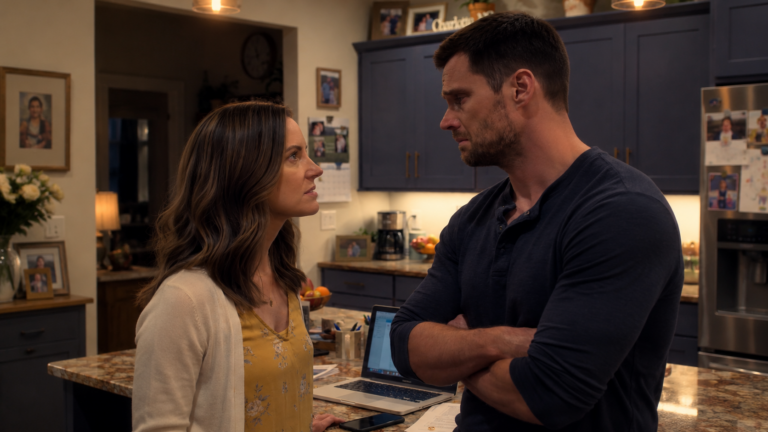
When he came home, Lauren had cooked soup. She left a bowl for him in the kitchen, then returned upstairs. He ate alone at the table where the confrontation had begun. Afterward he climbed the stairs and knocked on the spare-room door.
“I had the soup,” he said.
“Was it all right?”
“It was good.” He looked at the sewing patterns spread across the floor. “What are you making?”
“Nothing yet. I’m sorting what I have.”
He nodded. The answer described more than the fabric.
“Would you like to talk Sunday?” he asked. “Not about last night only. About whether there is anything we both want to try before making a decision.”
Lauren thought for a moment. “Sunday is good.”
“And until then?”
“Until then, I will answer you honestly if you ask a question. Even if the answer is uncomfortable.”
“Same,” Owen replied.
It wasn’t a promise to save the marriage. It was something narrower and more difficult to perform consistently. He went downstairs. Lauren returned to her patterns. Outside, the first autumn leaves were gathering along the curb.
Chapter Eleven: The Room Without a Stage
Sunday came cold and clear. They chose a small public garden because neither wanted their conversation to be shaped by the rooms where they’d been avoiding each other. They sat on a bench overlooking a patch of late flowers. Children ran along a path, careful not to step in the wet grass. A groundskeeper emptied a bin nearby.
Owen had brought three questions written on a folded card. Lauren had brought a notebook. They agreed not to read long statements. They would speak, listen, and ask again when they didn’t understand.
“Do you want to stay married?” Owen asked.
Lauren held the question without rushing to fill the silence. “I don’t know,” she said. “I know I want to stop lying. I know I don’t want Reid. I know I hurt you. I also know I was unhappy before he called. If we stay together, it can’t mean pretending we were fine until he appeared.”
“I agree,” Owen said. “I don’t know whether I can trust you again. I also don’t want the rest of our lives to become a trial where I look for evidence against you.”
She wrote that sentence down. Not because it was quotable, but because she wanted to remember how it felt to hear the truth without having it polished into something flattering.
They talked about money, work, loneliness, and the meals they had stopped sharing. They disagreed about several things. At one point Lauren grew defensive when Owen described the phone being turned over at dinner. She nearly accused him of spying, then remembered he had seen one message by accident and later sought advice because she had announced a date. She apologized for changing the subject. Owen acknowledged that he had used the agreement partly to frighten her into taking him seriously. Neither statement erased the other.