The first thing that disappeared was a white envelope with a blue corner.
I knew that because the orchestra administrator in Cleveland had photographed it before sending it.
She had written my street address in thick black ink and drawn a tiny eighth note beside my name.
Her name was Dr. Lila Soren, and she had promised that the letter would change how I thought about the next year of my life.
I waited nine days, then twelve, then fourteen.
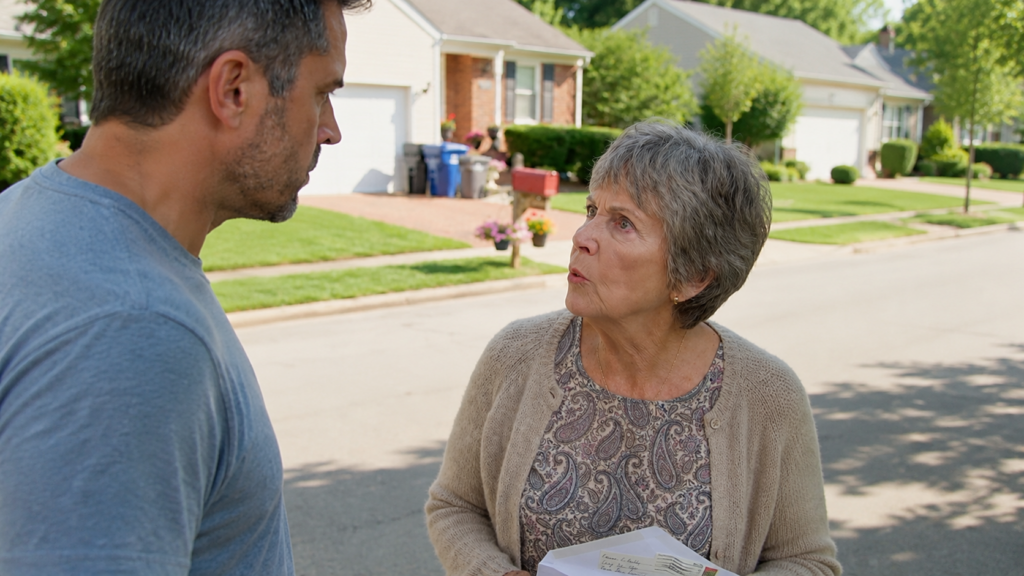
On the fifteenth afternoon, my neighbor June Bell knocked on my door carrying two tomatoes and an expression of practiced concern.
“You seem distracted, Mara,” she said.
I told her I was waiting for something important.
June looked past me toward the upright piano in my living room.
“Important enough to leave us?” she asked.
I laughed because I thought she was joking.
June did not laugh with me.
I was thirty-four, a piano technician who also taught six teenagers in a borrowed rehearsal room above the Bellwether Community Center.
Three years earlier, I had come to the lakeside town of Arlen to care for my father during his final illness.
After his death, I stayed because the students had nobody else to accompany them.
They were unusually talented and endlessly inconvenient, which made them difficult to abandon.
June’s daughter, sixteen-year-old Wren Bell, played clarinet better than anyone I had ever taught.
Wren also had the habit of apologizing whenever she performed well, as though excellence were something she had taken from another child.
June served as the unpaid coordinator of our regional youth ensemble.
She booked rooms, ordered music stands, collected permission slips, and had a key to almost every cupboard in the community center.
For two years, that arrangement had seemed like a blessing.
Now I understood how much access one ordinary key could buy.
The letter from Cleveland was an invitation to interview for a yearlong residency restoring instruments for the Great Lakes Orchestra.
The job paid enough to let me repair the roof of my father’s house, and it offered work I had wanted since college.
I had not told my students about it because nothing had been settled.
June somehow knew.
“If it comes,” I said, “I’ll tell everyone what I decide.”
Her eyes shifted to my mailbox by the porch steps.
“Mail is unreliable around here,” she said.
“You shouldn’t plan your future around it.”
She left the tomatoes on my railing, although I had told her I did not need them.
The next morning, I received a final reminder from the orchestra by email.
My response deadline was at noon.
The email referred to a packet that contained a timed restoration exercise and a short musical score.
Applicants had to prepare both parts without assistance and present the results in person.
The packet was sent only by post to protect the blind evaluation.
I called Cleveland and explained that nothing had arrived.
The administrator sounded surprised.
“The tracking shows delivery to your address last Tuesday,” she said.
I looked through my front window.
June was standing at the curb with a watering can, staring at my mailbox.











