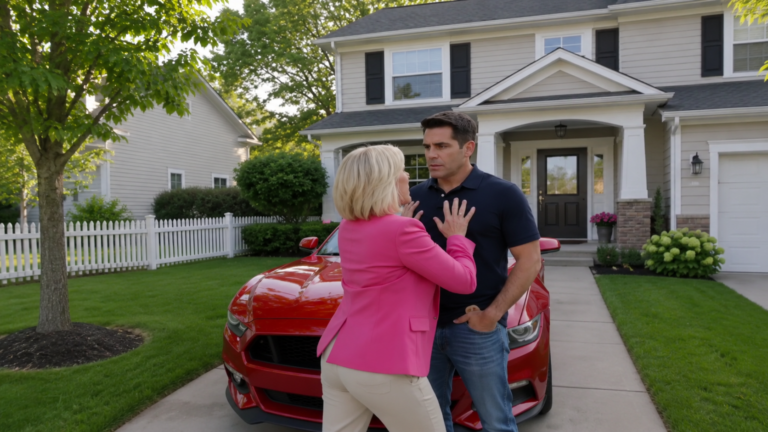
Vivian objected to nearly every step.
She said the meeting was an attempted coup.
Meredith replied that accounting questions were not a coup.
The attorney reminded everyone to address the chair instead of each other.
Howard presented the original drainage map and the town’s written response.
Jeanette described the historical development proposal without claiming it established current guilt.
Meredith summarized payments the outside auditor could not yet reconcile.
Then I stood and described the damage to my wall and gate.
I showed photographs, the police report numbers, and the threatening notice.
I did not say I knew who painted the red letters.
I said whoever did it wanted me to sign away access that I had not agreed to give.
A resident asked whether the sheriff had identified suspects.
I said the investigation was ongoing.
Vivian seized on the uncertainty.
She demanded to know why I was blaming her.
I said I was quoting her statement that the damage was a consequence of refusing the agreement.
The words had been recorded on my phone in my own driveway.
The audio played over the room’s speakers.
Vivian’s voice sounded cold and unmistakable.
Give us the access agreement, Caleb, and all of this stops.
The room remained quiet after the recording ended.
Peter stared at the floor.
One board member asked if Vivian wanted to explain what she meant.
She said she was merely describing the association’s enforcement process.
The attorney pointed out that physical damage to private property was not an enforcement mechanism described in the bylaws.
Vivian called him biased.
The chair closed the discussion and called the lawful motion.
The board voted to suspend Vivian’s presidential duties while a formal review proceeded.
The membership then approved a special election under the procedures in the governing documents.
Nobody cheered.
The residents understood that removing a title would not pay for repairs or determine criminal responsibility.
But the room felt different afterward.
Power had moved from one person’s threats back into a process other people could question.
The Man Who Cut the Lock
Three days after the vote, Officer Ward asked whether I could meet her at the station.
A maintenance worker had agreed to provide a statement.
His name was Travis Kemp.
He said he had helped remove the first gate latch under instructions from a supervisor who told him the access agreement had been signed.
Travis expected to find an abandoned service entrance.
Instead he saw children’s bicycles through the workshop window and knew somebody lived there.