CHAPTER TWELVE — A CHOICE FOR OWEN
Owen Kessler did not answer his phone when Marianne called.
He did answer when Valerie sent a formal request for accounting access and copied the association’s independent counsel.
He replied that the portal would be restored after an internal audit.
Valerie wrote back that she was the accountant responsible for preparing that audit.
The exchange was brief and increasingly sharp.
Liam received copies through the homeowners’ legal group.
Meanwhile, Brenda continued sending late-fee notices.
Each carried a smaller amount than before but retained the disputed Resolution 4-B citation.
Elise sent another demand that the practice stop.
Then a different problem emerged.
Stonebridge had scheduled a funding advance to the association on Friday.
If the money arrived, it could be routed through contracts already signed by Owen and Brenda.
If it did not arrive, several vendors who had been told to expect payment might refuse to work on ordinary maintenance projects.
The neighborhood could face immediate consequences either way.
Marianne asked the homeowners to attend a working session, not a rally.
She wanted someone to distinguish legitimate obligations from the proposed pavilion deal.
Felix volunteered to review electrical maintenance bids.
Hector knew two roofing contractors and offered to compare their estimates.
Ruby’s brother worked for a paving company and could inspect the parking lot.
Liam agreed to help coordinate the list.
The session began at nine on Friday morning.
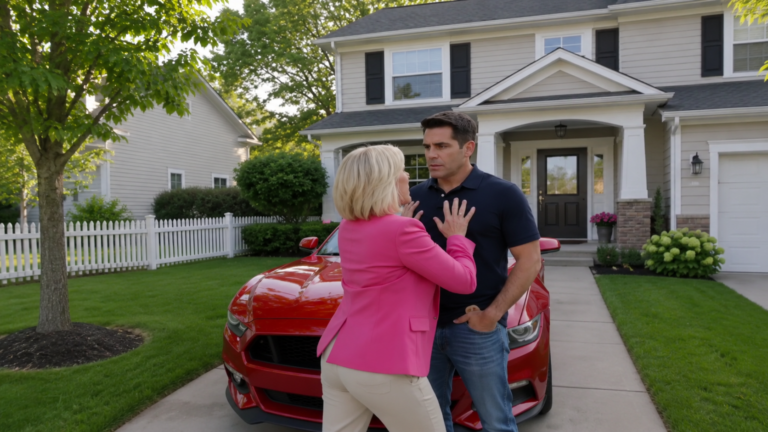
At ten fifteen, Owen arrived without Brenda.
He looked as though he had not slept.
He asked to speak privately with Marianne.
She refused.
“If we’re discussing association business, Valerie stays,
” she said.
Owen glanced at Liam and the other residents.
“They’re not board members.”
“Then we can meet in the open room with our attorney,” Marianne replied.
Owen sat at the far end of the table.
For several minutes he said nothing.
Then he admitted he had signed a preliminary commitment to Stonebridge believing the renovation would generate event rental income.
“I thought it would lower dues in five years,” he said.
“And I thought Brenda had the necessary authority to create a compliance fund.”
Liam asked whether Owen had read Resolution 4-B before signing the financing documents.
“She told me it was approved,” Owen said.
Marianne leaned forward.
“You seconded the motion to delay that vote.”
Owen rubbed his forehead.
“She said the board could ratify it later.”
Valerie looked stunned.
“You cannot promise a lender money from penalties that don’t legally exist.”
“I know that now,” Owen replied.
“What did you receive?” Liam asked.
Owen looked up sharply.
“Nothing.”
“No consulting payment?”
“No.”
“No share in the event pavilion?”
Owen did not answer immediately.
Marianne held his gaze.
“Owen?”
“I was offered a management role after the project opened,” he admitted.
The room fell quiet.
The offer had not been formally accepted, he said, and no money had changed hands.
But the future job explained why he had defended a renovation the homeowners twice rejected.
Valerie asked him to provide the communications.
He hesitated.
Then he took out his laptop.
“There are messages,” he said.
“A lot of them.”
Elise later advised the board to preserve the devices and obtain independent counsel before distributing any material.
The working session ended with a new practical question.
Who would keep the community functioning while the managers and board members were investigated?
Iris looked around the table.
“The people who actually live here,” she said.
It was not a heroic answer.
It meant collecting bids, paying legitimate bills, and organizing a fair vote under the governing documents.
But for the first time, those tasks were being handled in the open.