CHAPTER THIRTEEN — THE SALE THAT DID NOT HAPPEN
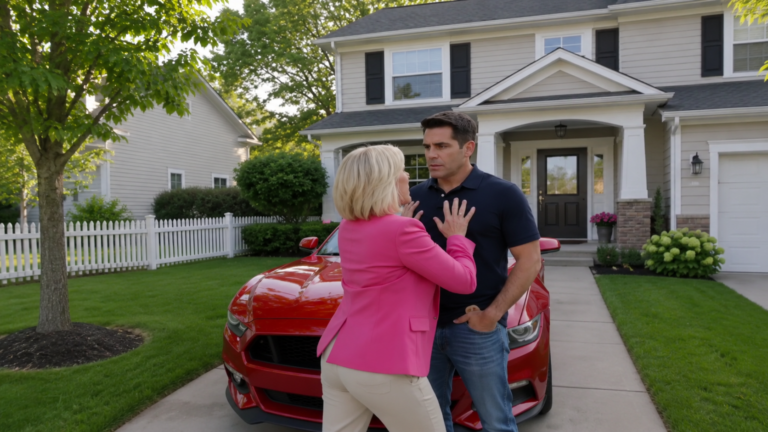
Thursday morning arrived with clear skies and a wind that rustled every plant in Liam’s front garden.
The original sale time was ten o’clock.
A temporary court order already blocked the auction of his house, but he went to the trustee’s office with Elise to ensure the notice had reached everyone involved.
Nolan Pike was waiting in the lobby with two employees.
His suit was expensive and his expression careful.
“The sale has been postponed,” he said before Elise asked.
“Postponed or cancelled?” she replied.
“Postponed pending review.”
“I want written confirmation.”
Nolan handed her a letter.
Liam read it while standing beneath a painting of a bright desert landscape.
The letter acknowledged the court order but preserved the company’s claim to collect a debt if a court later found it enforceable.
Elise accepted that it was sufficient for the immediate morning.
She did not treat it as a final resolution.
Outside, a group of homeowners waited by their cars.
They had come because each had a disputed notice and because they wanted to see the trustee with their own eyes.
Liam told them the sale had not gone forward.
Several people hugged.
Ruby cried quietly.
Hector called his wife.
Iris stood beside the parking lot garden, where a few small flowers had pushed through hard soil.
“What now?” she asked.
“Now we find out where the money went,” Liam answered.
The next week moved quickly.
The association’s independent counsel demanded the complete contracts.
Stonebridge suspended the proposed funding advance after its review found inconsistent representations about the board vote.
GroundSafe terminated its inspection arrangement with Greenward until billing questions were resolved.
The bank maintained a hold on the unusual disbursement while the association corrected its list of authorized signers.
None of those steps proved every allegation.
Together they prevented the plan from racing ahead while investigators examined it.
Brenda’s management company received a formal notice of termination for cause, subject to the contract’s dispute procedures.
She responded with a letter denying wrongdoing and threatening a lawsuit.
Nolan’s company ceased sending sale notices on the disputed emergency landscape fines after receiving a broader legal challenge from affected owners.
Valerie began reconstructing the financial records from bank statements, vendor invoices, and backups preserved before her portal access was removed.
The figures were ugly.
The association had paid consulting fees for the pavilion project that most members did not know existed.
It had also paid Greenward for inspections of houses where owners had never granted entry.
Some invoices claimed work had been completed before the contractor had even visited.
When Valerie presented her initial findings at an open meeting, she refused to guess at motives.
“These payments need independent review,” she said.
“We can identify what was paid and whether the services occurred.”
A homeowner asked how much money might be recovered.
“I don’t know,” Valerie answered.
“We have to finish matching the invoices to actual work.”
Liam listened from the second row.
A week earlier he might have been angry at such a cautious answer.
Now he trusted it.
Brenda had built a weapon from statements delivered with certainty.
The people taking her work apart had to be more precise.
The court later held a longer hearing on the challenged assessment against Liam.
Marianne testified that the board had never adopted Resolution 4-B on June 11 or June 18.
Grace described her absence and the lack of an emergency vote.
Felix’s recording established what the June 18 meeting actually contained.
The trustee’s lawyer did not offer an authenticated earlier board meeting that supported the resolution.
The judge ruled that the association had not established authority for the disputed emergency penalties and ordered the lien released as to Liam’s property.
The order also preserved his ability to pursue separate claims over the costs and disruption caused by the attempted foreclosure.
It did not settle every homeowner’s case.
But the central premise of Brenda’s demand had failed under scrutiny.
Liam returned home after the hearing and found an envelope from his mortgage lender.
It confirmed that his scheduled payments were current.
He placed it beside the court order, then opened the back door.
The garden smelled of sun-warmed earth.
A monarch hovered near the milkweed before settling on a leaf.
He realized he had not looked carefully at the flowers for weeks.
He had only looked at them as evidence.