Owen sounded relieved when I thanked him.
He admitted that he had worried about losing future contracts.
I told him that I understood why speaking up felt expensive.
He said he had a daughter who liked to ride her bicycle through neighborhoods like ours.
He did not want her growing up in a place where somebody could redraw a family out of its own backyard.
After the call, I walked to the fence that Karen had tried to destroy.
The replacement boards were still paler than the older wood.
Evelyn would have wanted me to stain them before the next rain.
For the first time, I considered that the repairs might someday be the least important evidence of what had happened.
THE WOMAN AT THE BUS STOP
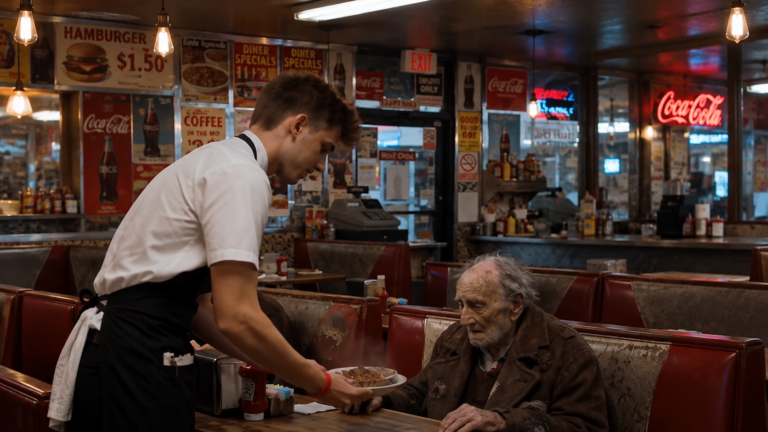
Sophie met me for breakfast on Saturday at the diner near the library.
She had brought her laptop and the stubborn expression she wore whenever she intended to solve a problem without asking permission.
She said a former neighbor had contacted her through a community page.
The woman’s name was Helen Armitage.
Helen had lived two streets over until her husband became ill and they moved closer to his treatment center.
She remembered Karen organizing a petition against a homeowner who had refused to remove a shed.
The petition had described the shed as a danger to children.
Helen had inspected the structure herself and found nothing more threatening than a rusty latch.
The homeowner had sold his house after months of complaints and surprise inspections.
A development company had purchased it through a holding business.
Helen did not know whether that history was related to my case.
She knew only that the pattern looked familiar.
Sophie had already asked Helen to preserve any letters she still possessed.
I told my daughter that she had done the right thing by avoiding public accusations.
She rolled her eyes and said she had learned something from watching me refuse to take Karen’s bait.
Then her expression changed.
Helen had also remembered a man who attended the old neighborhood meetings without introducing himself.
He carried a leather folder and waited near the exit.
Helen had seen him speaking privately with Karen after the petition vote.
Sophie showed me a photograph taken at a community picnic.
The man stood in the background beside a folding table.
I recognized him from the county hearing.
He was the consultant who had tried to describe Russell’s proposal as a community safety project.