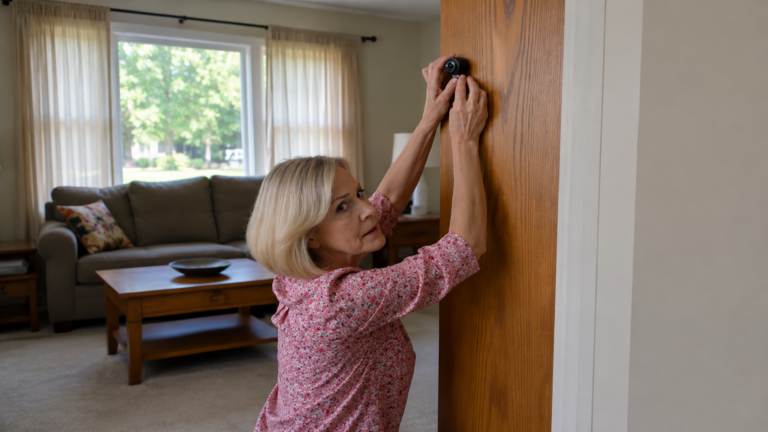
Vivian said the locks were necessary because some older residents wandered at night.
Evan refused to install replacements without written confirmation that they complied with applicable requirements.
Vivian became angry and canceled the work.
He kept the estimate and messages.
I asked whether he had reported the locks.
He said he had given the information to Simone’s agency and the detectives.
“I didn’t know where the line was,” he said.
“I kept telling myself I wasn’t a caregiver.”
I told him he had recognized a reason to ask for verification.
“Maybe I should have asked sooner,” he replied.
I did not offer him absolution.
I said I was glad he had spoken now.
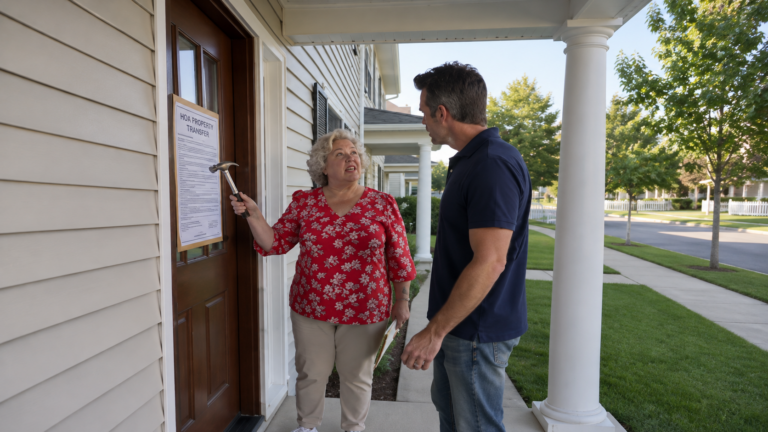
He asked whether the county had required me to build a fence.
I told him it had not.
He laughed once without humor.
“She made it sound like a court order.”
“She made a lot of things sound official.”
We ended the call with the understanding that the investigators would handle the details.
Three days later, the county announced a civil enforcement action concerning business licensing and residential care requirements at Vivian’s address.
The public filing did not prove every allegation, but it identified the agencies involved and the corrective steps being sought.
It also explained that certain proceedings would occur separately to protect the rights and privacy of residents.
I forwarded the filing to Mara and asked whether it affected my vandalism complaint.
She replied that the matters could share evidence without becoming a single case.
That distinction mattered.
Vivian’s care operation might have violated rules even if nobody had thrown garbage into my pool.
The dumping might have been unlawful even if her care operation had been legitimate.
A satisfying story could merge those problems into one dramatic revelation.
Real accountability required each claim to stand on its own evidence.
Mara also explained that my civil claim would need reliable proof of the vandalism and damages.
I supplied the invoices, the county’s findings, the video files, and the photographs of the debris.
She contacted Vivian’s attorney about preservation and potential resolution.
The first response denied that Vivian had damaged my property.
The second offered to discuss a settlement without any admission of liability.
I read both letters twice.
I was furious at the denial and suspicious of the offer.
Mara reminded me that settlement discussions were not the same as factual findings.
“We can negotiate without agreeing to her version of events,” she said.