I also could not know everything she believed at the time.
I began writing my questions on separate sheets.
Some were for lawyers.
Some were for Allison.
Others were questions no document would ever answer.
I kept those in a different folder so I would not ask an accountant to solve my grief.
Chapter 17: The Mediator’s Question
During a settlement conference, a mediator asked what resolution would mean to me personally.
I began listing recovered payments, corrected records, and acknowledgments of harm.
She said those were legal and financial goals.
She wanted to know whether I had any other expectation.
I almost said I wanted Preston to admit he had tried to humiliate me.
Then I realized an admission would not restore my marriage or my company.
I told her I wanted the workers treated fairly and the records made accurate.
She asked whether I could live with an agreement that did not declare a single person responsible for every loss.
I said I could live with a carefully documented settlement, though I would never pretend uncertainty was the same as innocence.
Daniel later said that distinction had helped the negotiations.
I did not feel victorious.
I felt as though I had stopped demanding that the legal system repair my private pain.
The two harms were related, but they were not identical.
On the drive home I called my father.
He asked whether we had reached an agreement.
I said not yet.
He asked whether I had eaten.
I told him I was about to stop for dinner.
He said that sounded like progress.
I laughed.
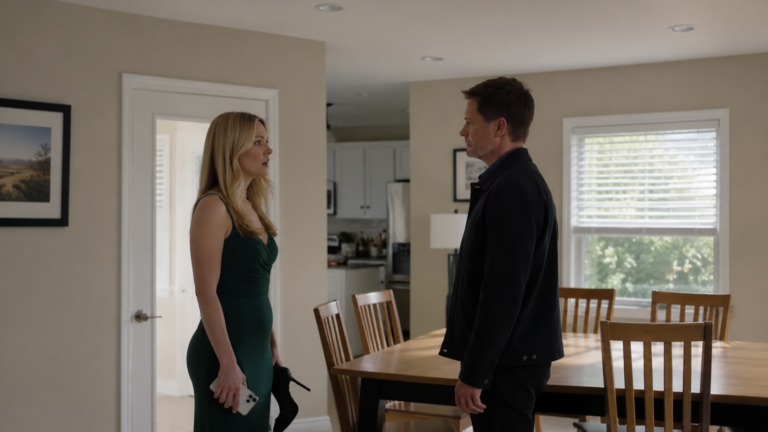
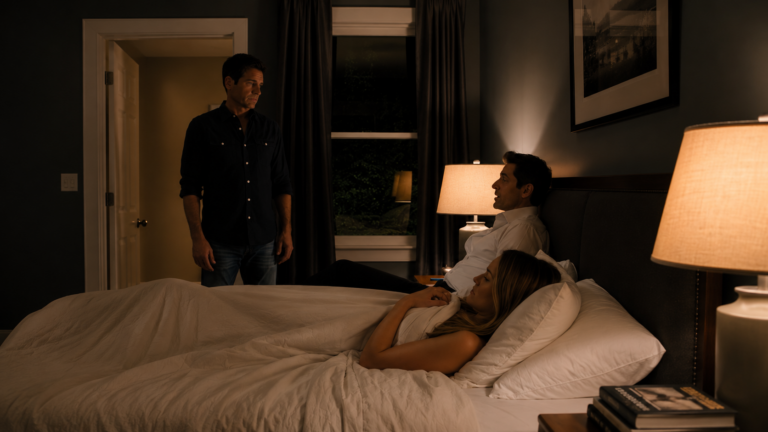
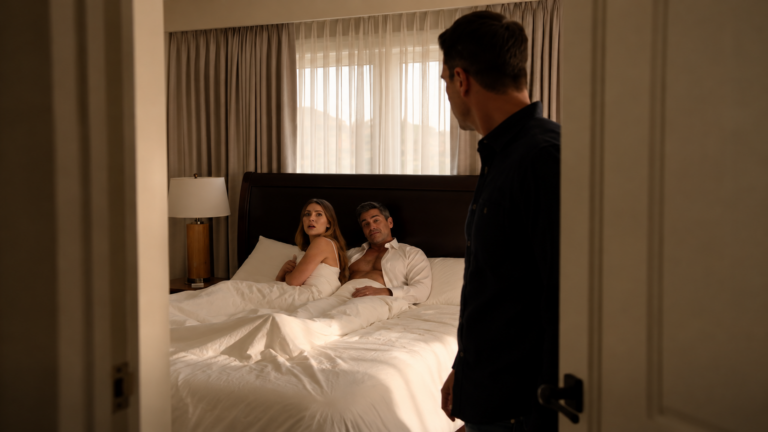
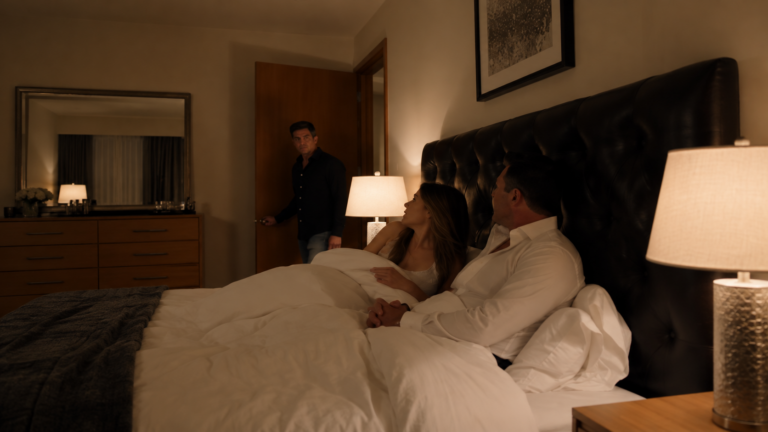
His simple concern was the opposite of Preston’s performance in my bedroom.
It did not require power over me to matter.
Chapter 18: The Empty Chair
Daniel asked me to spend the night somewhere else while we sorted out what had happened.
I refused to abandon my house, but I agreed that Allison and I needed separate rooms.
She packed an overnight bag without asking where I wanted her to go.
Before she left, she tried to explain Preston.
She said their relationship had begun when I became preoccupied with the company.
She said he had listened when I was too exhausted to talk.
I told her loneliness might explain a decision to seek comfort, but it did not explain handing a stranger access to our confidential records.
She said she had not intended that.
I believed she had not intended the consequences.
I did not believe intention restored what was gone.