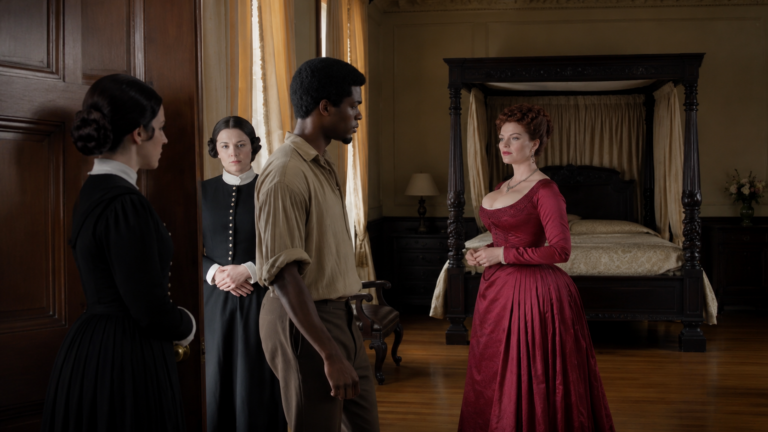
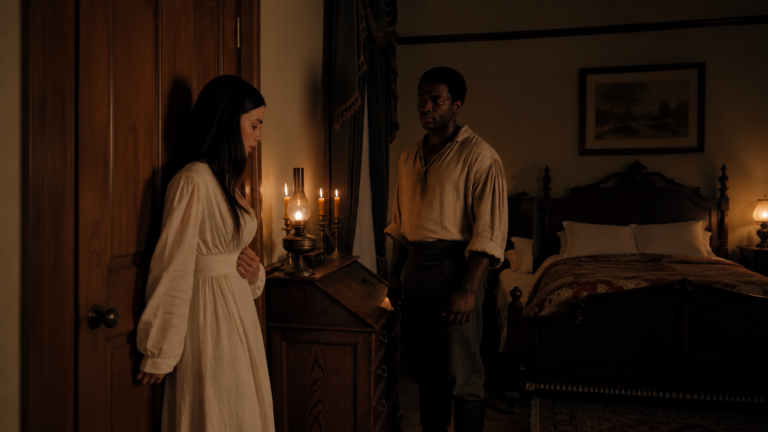
He would handle it himself
Handling it himself meant the East Cabin
It meant the thick walls and the high window and the lock from the outside
It meant removing Amos Jaybird from the visibility of the other enslaved people on the property from the visibility of neighbors and travelers and county assessors and placing him in a state of enforced invisibility from which Cornelius clearly calculated the problem he represented would simply stop existing
Arthur understood that this was not an unusual calculation for its time and place
That is part of what makes it so difficult to look at directly
It was a form of control that existed within the broad tolerance of a social system that had decided certain things were not crimes and certain people were not victims
Cornelius Tatum did not lock Amos Jaybird in that cabin because he was uniquely cruel
He did it because the system in which he operated made it possible and the community around him made it acceptable and no one in a position to object had sufficient power to do so
What happened in that cabin over the sixteen to eighteen months that the counting marks suggest the documents do not say
Hester Gains one thousand eight hundred sixty six claim suggests Amos was alive when the war ended or at least that she did not know he was dead
The disoriented figure in Solomon Gentry s account the man who walked out of the eastern woods in January of one thousand eight hundred sixty three and could not fit his answers to the questions asked of him may or may not have been Amos
If it was then the chaos of the Battle of Stones River Union troops moving through Confederate lines disrupted the entire social architecture of the county momentarily suspended provided the only opening that the locked door could not withstand
Not force not rescue but the temporary collapse of the system that maintained it
Arthur found one more document in Ledbetter s bundle
It was not a letter
It was a half page of notes in Cornelius Tatum s handwriting that appeared to have been written sometime in one thousand eight hundred sixty three after the battle
The notes were fragmentary not a letter not a journal entry more like a man working through something on paper
Several lines were crossed out
What remained legible was this the cabin is to remain as it is