CHAPTER FIVE B — THE COMMUNITY LUNCH
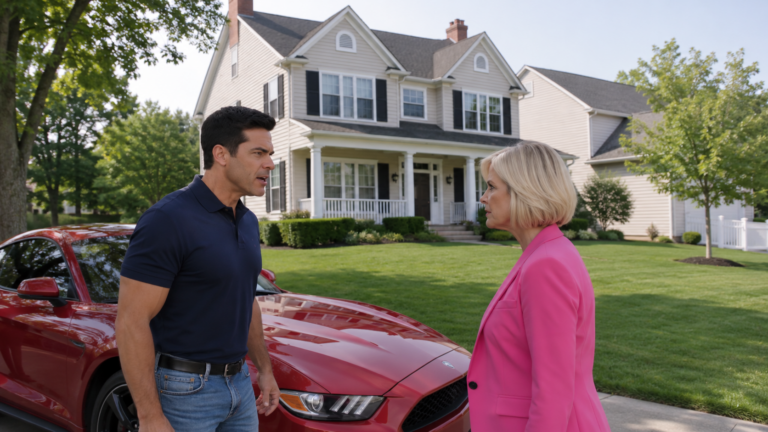
Patricia organized a community lunch at the senior center and distributed invitations to every house except mine.
Mina received two invitations and brought the extra one to my door.
“You can come with me,” she said.
“Would that create a scene?”
“Only if somebody decides to make one.”
I considered declining because I was tired of being discussed as though I were an unwanted guest.
Then I remembered that the senior center belonged to the neighborhood, not to Patricia.
I agreed to attend for half an hour.
The hall smelled of soup and fresh bread when we arrived.
Children carried paper plates between tables while older residents compared gardening tips.
Patricia stood near the kitchen directing volunteers with a clipboard.
She saw me enter and stopped speaking.
Mina took two plates from the serving table.
“There’s plenty,” she said loudly enough for the nearest volunteers to hear.
We sat beside Harold Pike, who was explaining to a young father why the street’s oldest oak had survived a lightning strike.
He greeted us warmly and continued his story.
For fifteen minutes, the lunch was ordinary.
Then Patricia approached with a woman wearing a badge from a local charitable foundation.
“This is the new resident I mentioned,” Patricia said.
The woman smiled uncertainly.
“I’m Nora Fenwick,” she said.
“I help coordinate neighborhood grants.”
“Rowan Vale,” I replied.
Patricia placed a hand on the back of my chair.
“Rowan has concerns about our community traditions.”
“I have concerns about whether training access is tied to unrelated chores,” I said.
Nora looked at Patricia.
“Our grant supports vocational equipment,” she said.
“Not household services.”
Patricia laughed too quickly.
“Of course not.”
Nora asked whether she could visit the workshop the following week.
Patricia said she would arrange it.
After they left, Harold leaned toward me.
“She didn’t expect that question,” he said.
“Neither did I.”
He offered me another piece of bread.
“Good soup,” he said.
“That’s why I came.”
Mina laughed so hard she nearly spilled her water.
On the way home, we passed three neighbors who had not attended the earlier meetings.
They asked whether I planned to join the planting committee.
I said I might, once my front door was repaired.
One of them looked embarrassed and offered to help with the paint.
I thanked her without pretending the offer solved everything.
CHAPTER SIX — THE PRICE OF ACCESS
The next morning, someone slashed the tires on my truck.
They had cut both passenger-side tires, leaving the vehicle tilted toward the curb.
A paper cup filled with roofing nails sat beside the front wheel.
I called Officer Serrano and waited inside until he arrived.
He examined the cuts and asked whether I had argued with anybody at the library.
“Yes,” I said.
“In front of about thirty people.”
He wrote down the details.
“You understand why that doesn’t establish who did this.”
“I do.”
“Good.”
He looked toward Patricia’s house.
“Because I don’t want you getting hurt trying to prove it yourself.”
I had a hearing scheduled at the courthouse that afternoon.
My supervisor, Judge Amelia Frost’s court administrator, called when I missed the morning briefing.
I explained that my vehicle had been vandalized and that I would arrive by taxi.
She asked whether I needed to withdraw from the Northbridge review.
“Possibly,” I said.
“I’ve discovered a connection between the contractor and my neighborhood.”
“Document the conflict and do not investigate it personally.”
“I won’t.”
“Rowan, I mean it.”
“I know.”
I sent a written disclosure before leaving home.
By the time I reached the courthouse, the judge had appointed a second monitor, Dana Okafor, to handle the Northbridge component while the connection was assessed.
Dana was patient, sharp, and unimpressed by dramatic coincidences.
“You’re not allowed to turn this into your private crusade,” she told me in the hallway.
“I know.”
“Then stop looking disappointed.”
“I’m not disappointed.”
“You look like somebody confiscated your favorite wrench.”
I almost laughed.
Dana studied the photographs of my damaged truck.
“This is a crime against you,” she said.
“The contractor review is a separate matter.”
“Understood.”
“But if a resident approaches you, you can direct them to me or the advocate.”
She handed me a card.
“And if your neighbor is influencing access to contracted services, I will find out through the proper channels.”
That evening, Patricia stopped me while I was walking home from the corner store.
“I heard you made quite a scene at the courthouse,” she said.
I had no idea who had told her I was there.
“You heard wrong.”
“People with connections should be careful about abusing them.”
“So should people with volunteer titles.”
She stepped closer.
“You think you’re special because you bought a house here.”
“No.”
I looked directly at her.
“I think I have the same right to live here as everybody else.”
Her expression hardened.
“We’ll see how long that lasts.”