Chapter Ten: The Night Before the Vote
That evening the county released a notice that Thursday’s vote would proceed but would include an amendment proposing a ninety-day pause on route closures.
Preston Hale said the county needed a defensible service plan before making irreversible decisions.
The statement did not say which commissioners supported the amendment.
Inez called to tell me that the maintenance department had ordered the Marigold kept ready for Friday’s route regardless of the vote.
“We don’t know what happens after that,” she said.
“Nobody does yet.”
“Do you think the pause will pass?”
“I don’t know.”
“That’s the first useful uncertainty I’ve heard from your side.”
At my brother’s apartment, I found a message from Laura asking to talk somewhere neutral.
We met at a small diner beside the train station,
where the cups were chipped and nobody recognized either of us.
She arrived carrying the beige folder.
“I thought you might want this back,” she said.
“Keep it until the lawyers finish.”
“I made copies for counsel.”
She set the folder between us and took a long breath.
“I met Adrian because I wanted something to happen to my life that I hadn’t planned.”
“I understand wanting change.”
“I told myself that made the affair honest.”
“It didn’t.”
“No.”
A waitress brought coffee.
Laura waited until she left.
“Adrian used the same arguments with me that he used on clients.”
“What arguments?”
“That the old system was holding me back, that anyone questioning him was afraid of progress, and that the future would be clearer if I committed before asking too many questions.
”
“Did you believe him?”
“I wanted to.”
“That still leaves your decisions.”
“I know.”
She looked at me directly.
“I’m not asking you to take me back tonight.”
“What are you asking?”
“I want to know whether you’ll ever consider it.”
I watched a train pass behind the diner’s fogged window.
“I can’t promise that.”
“Is there somebody else?”
“No.”
“Then why won’t you try?”
“Because trying would require trust, and I don’t have enough left to start.”
She blinked hard but did not turn away.
“I can work for that trust.”
“You can work on being the person you want to be.”
“And us?”
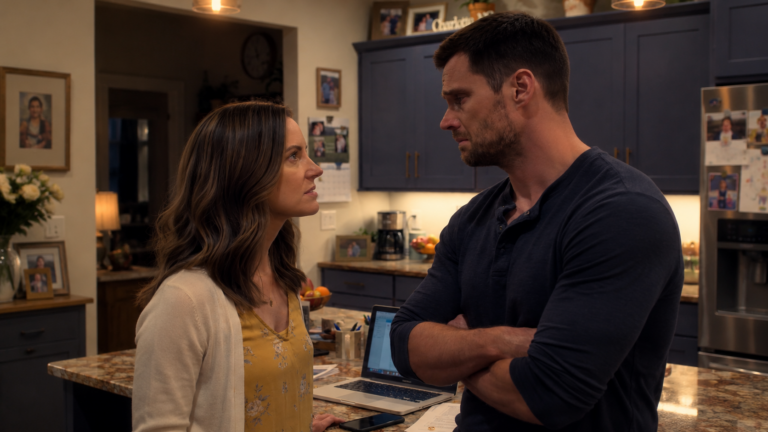
“I think we need to separate.”
The sentence arrived without anger.
That made it more difficult to say.
Laura folded her napkin into a narrow strip.
“Fourteen years,” she whispered.
“Yes.”
“Are they gone?”
“No.”
“Then what are they?”
“Part of our lives, even if our marriage ends.”
She looked down at the folder.
“I thought you’d use this to punish me.”
“I didn’t know what it meant when I put it on the table.”
“You knew enough to make me afraid.”
“I was afraid too.”
We talked through immediate practical matters without pretending the conversation was a reconciliation.
She would stay at the house until we could arrange an appraisal and decide what to do with it.
I would retrieve the rest of my belongings after Thursday’s hearing.
We agreed not to discuss the separation with colleagues before human resources determined how to handle the workplace conflict.
When we left the diner, Laura paused beneath the awning.
“Michael, I am going to tell the truth tomorrow.”
“About the report?”
“About the video, the names, and why I accepted Adrian’s explanations.”
“That’s your decision.”
“It should have been my decision weeks ago.”
She walked toward her car without asking me to follow.