The colonel had called for his carriage before breakfast.
He stood beneath the portico while Pritchard checked the harness straps with unusual care.
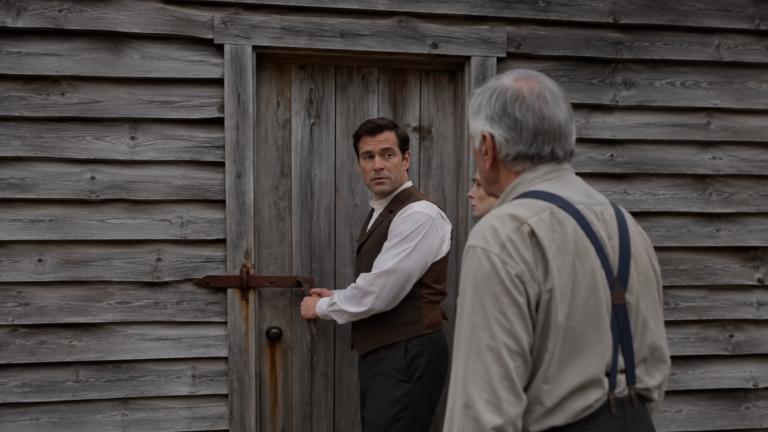
Daniel watched from the workshop doorway and saw the colonel glance repeatedly toward the kitchen passage.
Edmund was waiting for someone to make a mistake.
He had learned that a copy of the transfer list had left the house.
He did not yet know how many copies existed or whose hands held them.
Pritchard approached Daniel while carrying a bucket of water.
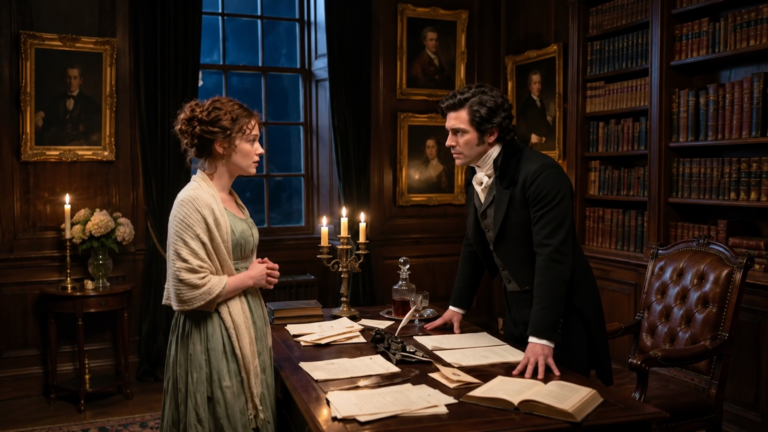
The steward said that the colonel had ordered the account books brought to his private room.
Daniel asked whether the books had been altered.
Pritchard said that he had refused to change a single entry.
He added that refusal was easier when another person knew what the original pages contained.
Daniel understood that the steward had crossed a boundary from which he could not retreat.
A few months earlier Pritchard would have called obedience the duty of a respectable employee.
Now he had begun to understand that respectability could become a convenient shelter for cruelty.
Ruth appeared at the kitchen door with a covered basket.
She walked past the carriage as though she intended to visit a sick relative.
The colonel stopped her with a sharp command.
He asked where she was going.
Ruth answered that Mrs Hensley needed broth for her fever.
The colonel lifted the cloth and inspected the jars.
He found bread and a small covered pot.
He did not find the statement hidden inside the false bottom of the basket.
Daniel had spent half the night repairing that bottom with thin strips of wood.
The colonel waved Ruth away.
She kept walking until the carriage yard disappeared behind the orchard.
Only then did she begin to breathe normally.
She did not go directly to Reverend Hale.
She followed the creek to the mill road and met a boy who carried messages for the parish.
The boy took the packet without asking what it contained.
Ruth watched him disappear between the trees before she turned toward Mrs Hensley’s cottage.
She had brought the broth because the illness was real.
Her errand could withstand a question because it had not been invented merely to disguise the other one.
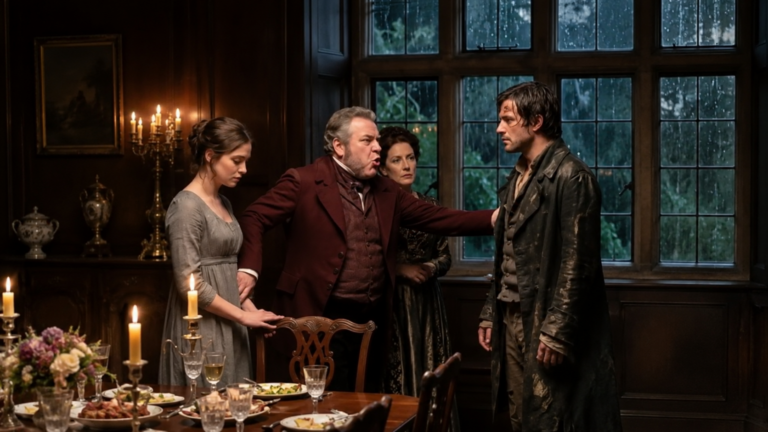
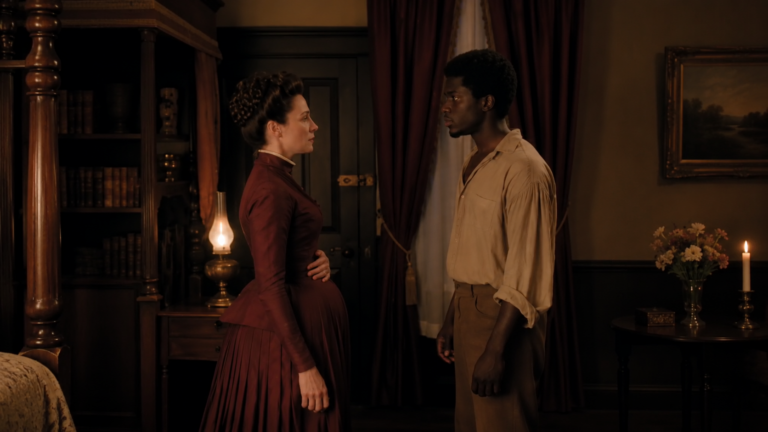
At Blackwood Manor the colonel entered the dining room and found Catherine seated before an untouched breakfast.
She had not slept.
Her face was pale beneath the morning light.
He asked whether she had written to Captain Vale.
Catherine looked up slowly.
She answered that she had asked the captain to account for his conduct.
The colonel struck the table with his palm.