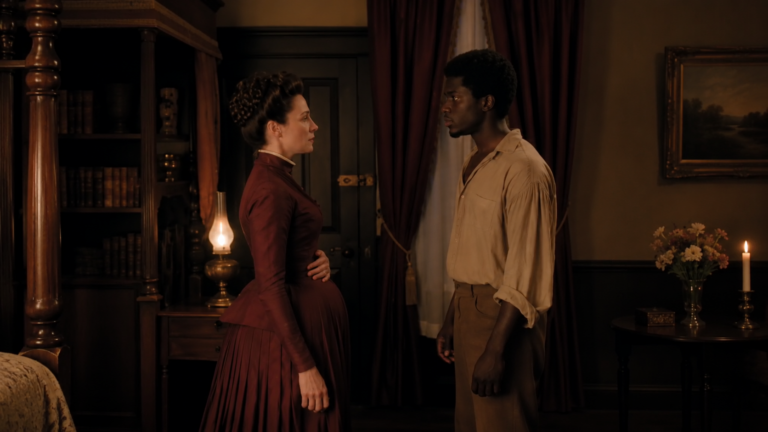
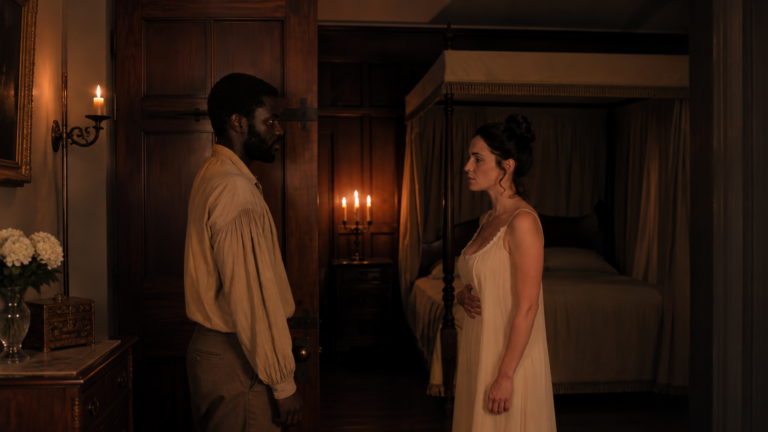
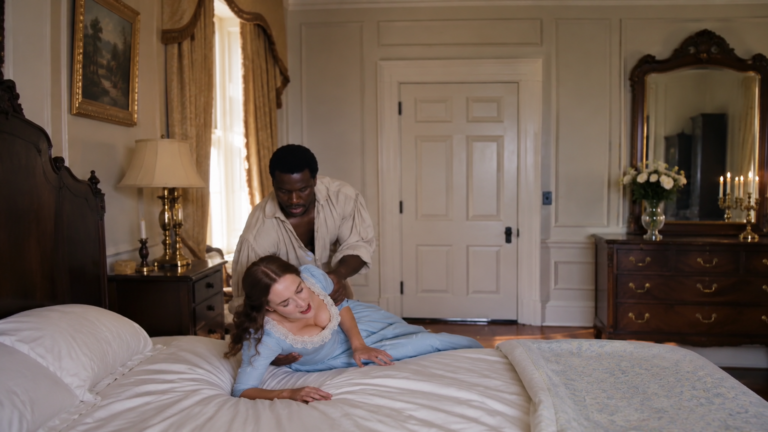
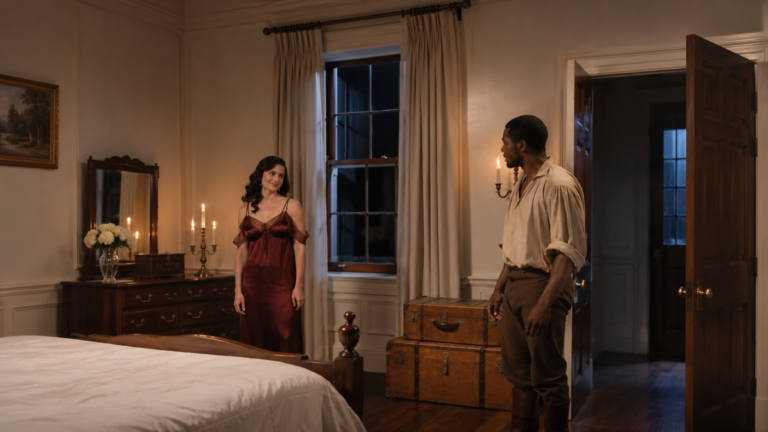
The colonel continued to resent the loss of control.
He blamed Bennett and Price for the scrutiny of his accounts.
He blamed Pritchard for preserving records.
He blamed Catherine for speaking openly.
He did not blame himself.
The estate’s finances grew worse after the lender demanded stricter accounting.
Edmund sold a portion of unused land to settle debts.
He became more isolated within the household he had once ruled through fear.
Daniel learned these details gradually through letters rather than a single dramatic revelation.
He read them at the workshop table after his work was done.
He did not take pleasure in every difficulty that befell the colonel.
He cared most about whether the people at the manor were safer.
THE DOOR THAT NO LONGER OPENED
Two years after leaving Blackwood Manor Daniel rented a small workshop of his own.
The building had a narrow front room and a larger space behind it.
The eastern window looked across a lane toward a row of maple trees.
Daniel placed his workbench where the light would fall across the grain of the wood.
He painted his name above the door in plain letters.
Daniel Carter Cabinetmaker.
The first customer was a widow who needed a sturdy kitchen table.
Daniel measured her doorway and asked how many people would sit around it.
She said that her family had grown since her eldest daughter married.
Daniel built a table with an extra leaf that could be added when visitors arrived.
The widow returned with her family to collect it.
They ran their hands across the smooth surface and thanked him for his care.
Daniel watched them carry the table into the street.
He remembered the chair he had been building on the morning the colonel sought a warrant.
That chair had been made under orders he could not refuse.
This table had been made under an agreement he had chosen.
The difference was larger than the objects themselves.
One evening a letter arrived from Isaiah.
It contained a drawing made by Thomas.
The picture showed a small wooden horse beside a house with a large window.
Isaiah wrote that Thomas had asked whether Daniel’s workshop looked like the picture.
Daniel smiled and pinned the drawing above his bench.
He wrote back that the window was almost exactly right.
He enclosed a careful drawing of the workshop and a few simple instructions for making a wooden wheel.
He told Thomas to ask Isaiah for help with the sharp tools.
He told Ruth that he still remembered the bread and apples she had packed for the road.
He told Isaiah that the first thing he saw every morning was the eastern light.
Then he set down his pen and looked around the room.
The shelves held finished boxes and unfinished chairs.
The floor smelled of fresh shavings.
The lock on the door belonged to him.
He could open it in the morning and close it when his work was done.
No bell would summon him to a locked bedroom after midnight.
No one could make his silence the price of survival in the same way again.
He knew that danger and injustice still existed beyond the workshop.
He knew that many people he loved remained trapped by them.
He would keep writing and working and helping where he could.
He would also allow himself the ordinary pleasure of a quiet evening.
Daniel extinguished the lamp and stepped outside beneath the stars.
He locked the door and placed the key in his own pocket.
For a long moment he stood in the cool air without moving.
Then he walked home along a street where nobody was waiting to order him back.
The End.