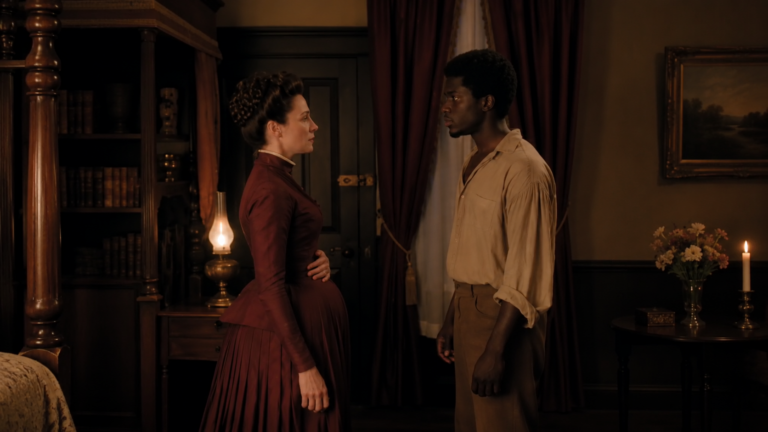
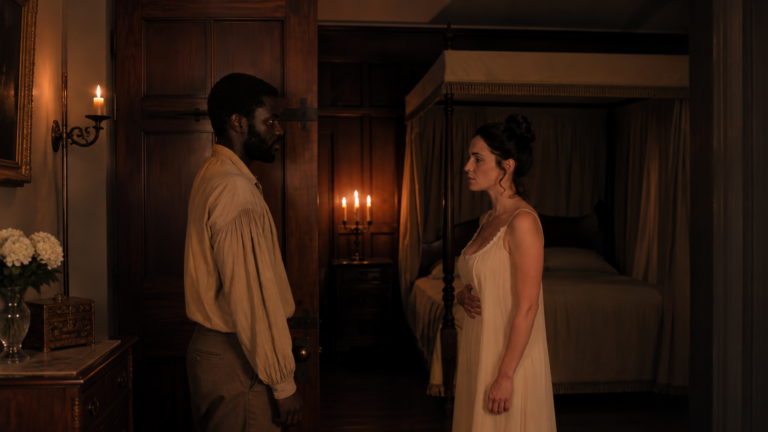
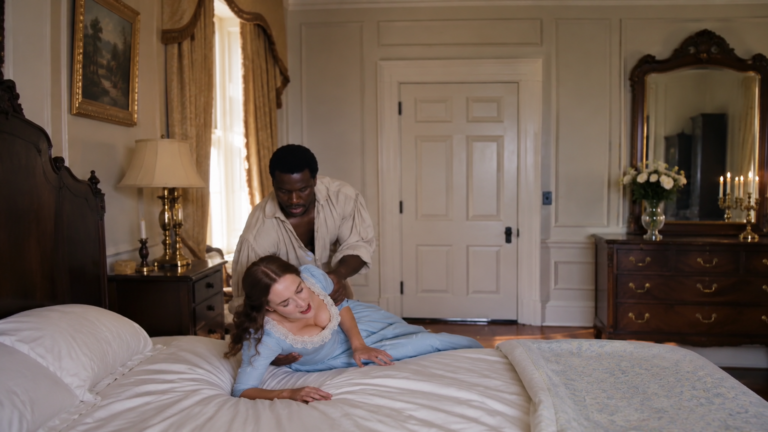
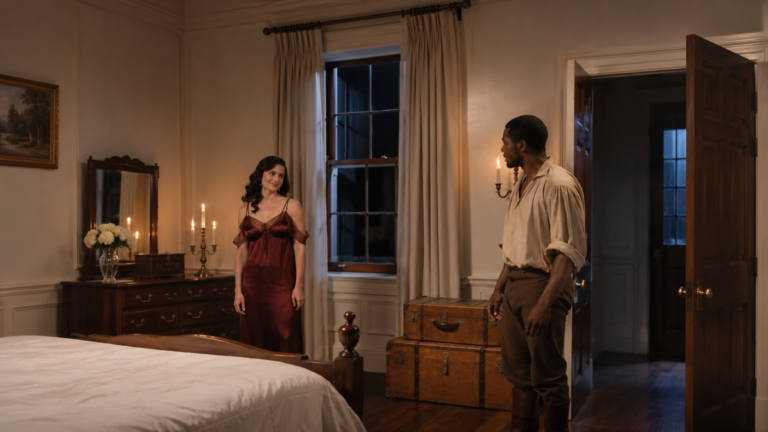
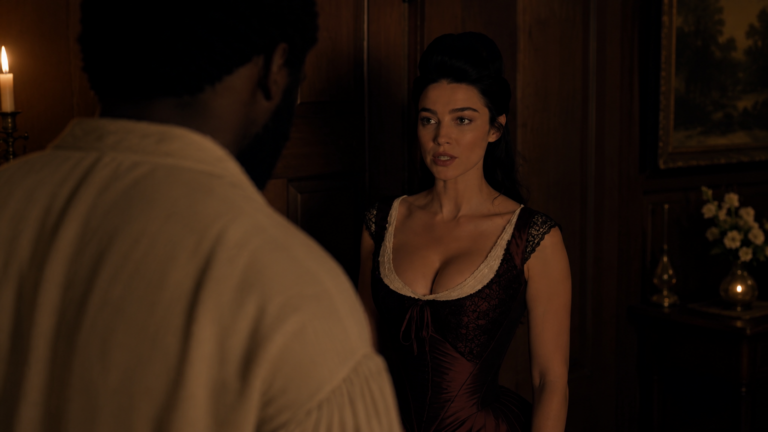
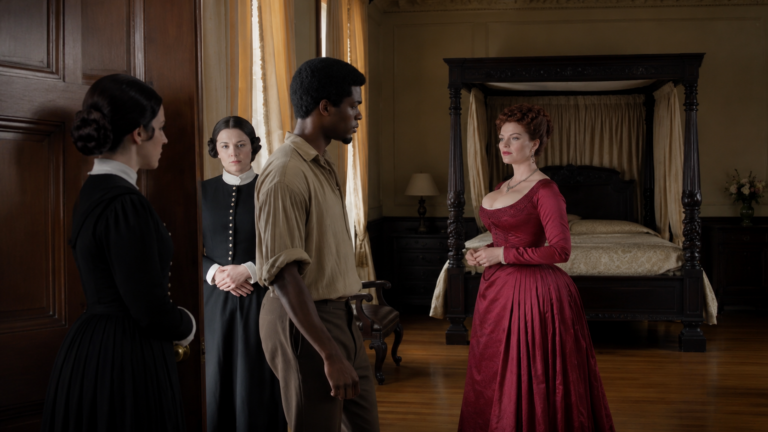
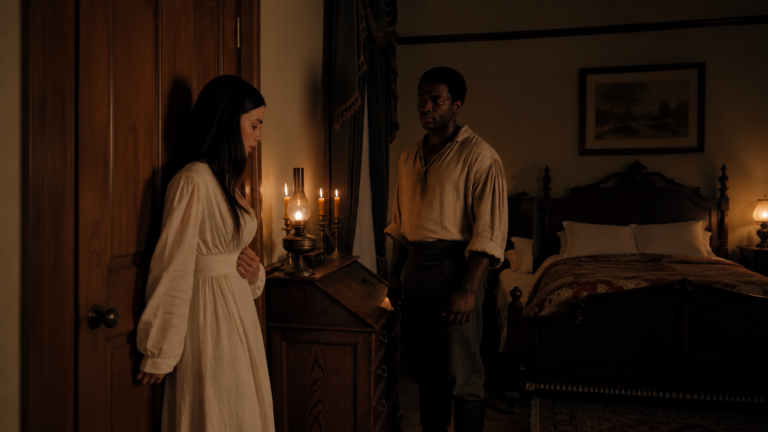
He said that every letter she sent made the family more vulnerable.
Catherine replied that silence had already made another person vulnerable.
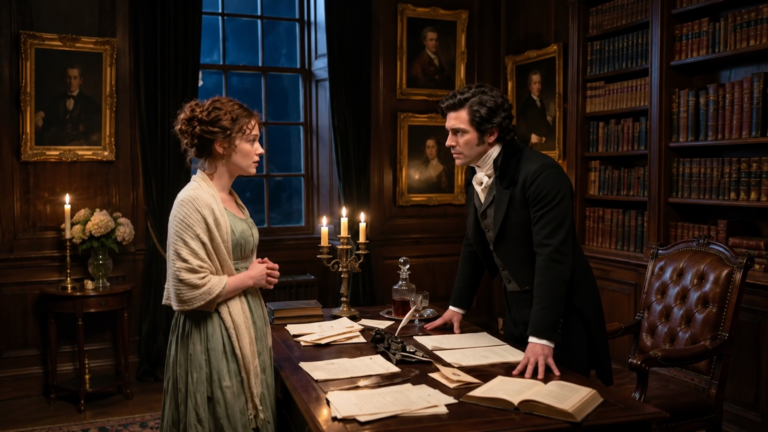
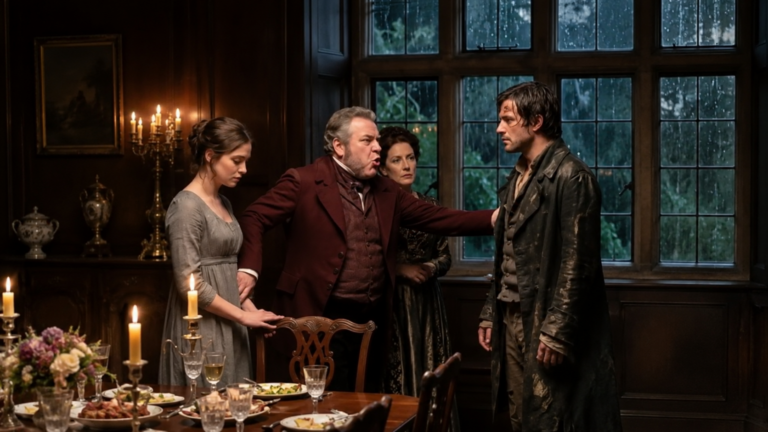
Edmund leaned across the table.
He asked whether she intended to protect Daniel at the expense of her husband.
She answered that Daniel had never been given a choice about any of this.
The colonel’s expression hardened.
He told her that she had begun to speak like Bennett.
Catherine said that Bennett had at least asked what the evidence proved before deciding whom to punish.
The colonel pushed back his chair.
He ordered her to remain in her rooms until he returned from the county seat.
She watched him leave without promising obedience.
The carriage departed shortly afterward.
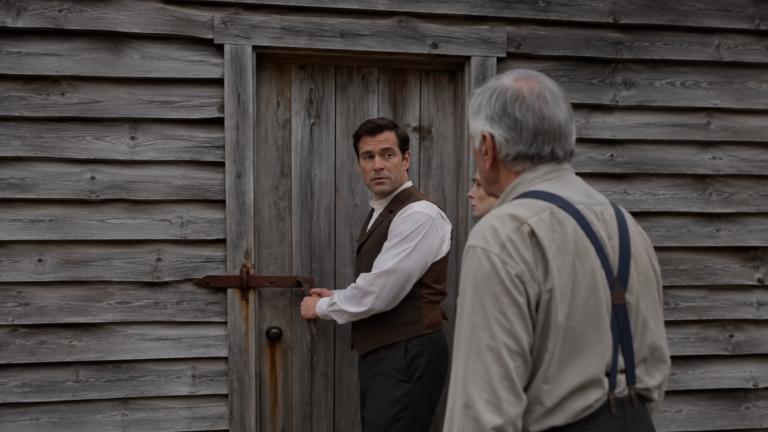
Pritchard stood beside the gate until the wheels passed the last row of poplars.
He then walked directly to the workshop.
The steward told Daniel that the colonel was seeking a magistrate willing to approve a complaint against him.
Daniel asked what accusation the colonel intended to make.
Pritchard answered that the colonel had mentioned stolen papers and an attempt to provoke disorder.
Daniel looked toward the distant road.
The accusation was dangerous precisely because the documents had been copied rather than stolen.
A false charge could still place him in chains before anyone examined the distinction.
He asked Pritchard to tell Bennett immediately.
The steward nodded and left to prepare another messenger.
Daniel returned to the unfinished chair on his workbench.
His hands knew how to shape wood even when his thoughts refused to settle.
He fitted a joint and tested its strength.
He thought about the people who had trusted him with their names.
He could not allow the colonel to turn their courage into a charge against them.
THE MAGISTRATE AND THE WITNESS
Bennett arrived shortly after noon with Reverend Hale and a local attorney named Samuel Price.
Price was a cautious man who knew the county’s courts and the men who controlled them.
He did not pretend that a truthful account guaranteed protection.
He explained that the colonel could make an accusation with very little supporting evidence.
He also explained that a magistrate might refuse to act if the complaint was contradicted by reliable witnesses before an arrest occurred.
Daniel asked whether he would be permitted to speak in his own defense.
Price paused before answering.
He said that the law did not treat an enslaved man’s testimony as equal to that of a white property owner.
Daniel had known this since childhood.
Hearing it stated so plainly still made the room feel smaller.
Bennett placed the copied ledger beside Pritchard’s signed account.