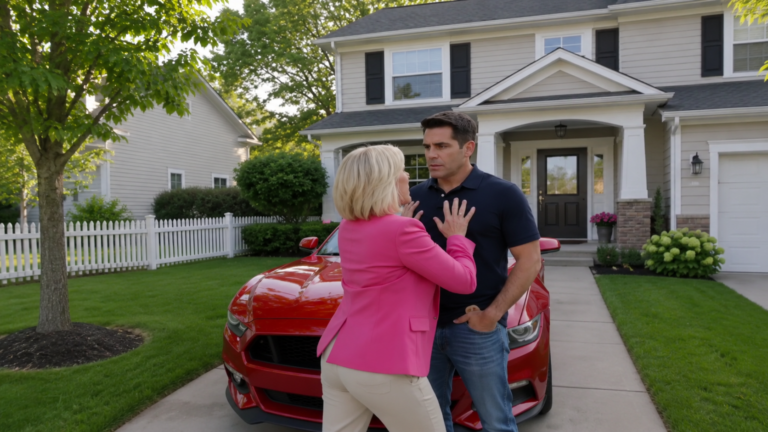
“Not yet. Someone from the company admits visiting your yard, but denies touching the door. We’re trying to establish who came after them.”
At that moment Alma hurried into the library holding a printed invitation. It had arrived with the afternoon post, addressed to the library’s volunteer storytelling committee. The Lost Room would open for a private preview that night. Under the venue address were four words: BRING YOUR OWN MEMORY.
Mara read the line, then looked at Owen.
“When he told you to look inside pictures,” she asked, “did Simon ever tell you what the last room was supposed to contain?”
Owen shook his head. “He said the last room wasn’t at Arcadia. He said the last room had to be real.”
Chapter Seven: The Wrong Door
By three o’clock, Holt had enough information to request a formal investigation of the attempted entry. Mara wasn’t given every detail, nor should she have been. She did learn that Rusk’s company had been operating the attraction under an unusually complicated agreement with an event sponsor. The premiere was meant to be filmed for prospective buyers of a traveling version of the game.
Mara’s house had not been leased to the company. But its exterior appeared in a promotional storyboard, drawn from photographs taken without her knowledge. Rusk had wanted a “real domestic environment” for the finale, not a convincing plywood imitation.
“He intended to use my home as part of his show,” Mara said.
Holt answered carefully. “That appears to be one possibility. We still have to prove intent.”
Mara did not need proof to know the idea repelled her. Someone had used her address as though a home were an empty stage available for rent by imagination alone.
At four, a temporary board replaced the plastic over her patio window. Tomas tightened the screws and stepped back. The boards were plain, unpainted wood. They made the house look shuttered and gave the living room an unfamiliar echo.
“You could stay somewhere else for another night,” Tomas suggested.
“I may,” Mara replied.
She wanted one clean hour in her house before leaving again. She gathered the glass from the rug with thick gloves, carried the pieces outside in a stiff cardboard box, and placed the brick on a shelf where police could collect it later if necessary. When she finished, she sat by the table and looked at the shared gallery again.
A new image had arrived, showing her living room through the broken window. The photograph had been taken after she left the house the previous evening. Someone had photographed the boardless opening from outside. The image was not cinematic; it was clumsy, blurred along one edge, and frightening precisely because it was so ordinary.