Anika located the locker through a rental ledger that Evelyn’s attorney obtained from the property manager.
Nobody tried to enter it secretly.
They sought permission from the person authorized to access the space and arranged to preserve any relevant contents.
The property manager said the locker had been rented under a defunct company name.
Several bills had continued arriving long after that company stopped filing annual reports.
At the appointed time, Evelyn, her attorney, and an independent records specialist entered the basement.
I was not present, but Evelyn later showed me photographs of the materials they cataloged.
The locker contained a cardboard box of old greeting cards, copies of care agreements, and envelopes addressed to Lucy in her mother’s handwriting.
Some envelopes had been opened.
Others were sealed with stamps that had never touched a post office.
One letter described a blue dress Evelyn bought for Lucy’s sixteenth birthday.
Another included an apology for missing a holiday and an assurance that Evelyn had never stopped trying to find her.
The letters contradicted the story Lucy had been told about abandonment.
They did not, by themselves, establish who had withheld them.
But a handwritten routing sheet showed that correspondence for Lucy was supposed to pass through Graham’s office.
His initials appeared next to several dates.
There was also a notebook with appointments, coded payments, and the name of a woman called Dr. Maren Solis.
Evelyn recognized the name of the physician who supervised Lucy’s care after the collision.
According to the family, Dr. Solis had retired abroad shortly before the girl’s supposed death.
Anika discovered that she still practiced in a clinic in Vermont.
When contacted through counsel, the doctor said she had never signed any death notice.
She also remembered opposing Lucy’s transfer because the girl was improving and wanted to return home.
Evelyn had not been told any of this.
The locker did not produce one perfect answer.
It produced a chain of specific questions that Graham could no longer dismiss as his wife’s grief.
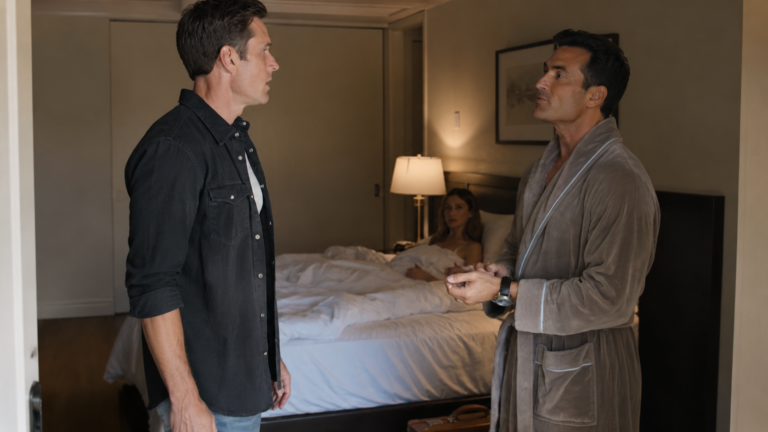
I thought of the way he had laughed in my bedroom.
At the time, his arrogance seemed personal.
Now it looked like a habit cultivated over years of escaping scrutiny.
CHAPTER 12: THE MAN AT THE FUNDRAISER
Two weeks after the confrontation, a photograph appeared online showing Graham at a hospital fundraiser.
He stood beside donors and smiled as though nothing had happened.
The caption praised his leadership in supporting families with neurological injuries.
I almost threw my phone across the kitchen.