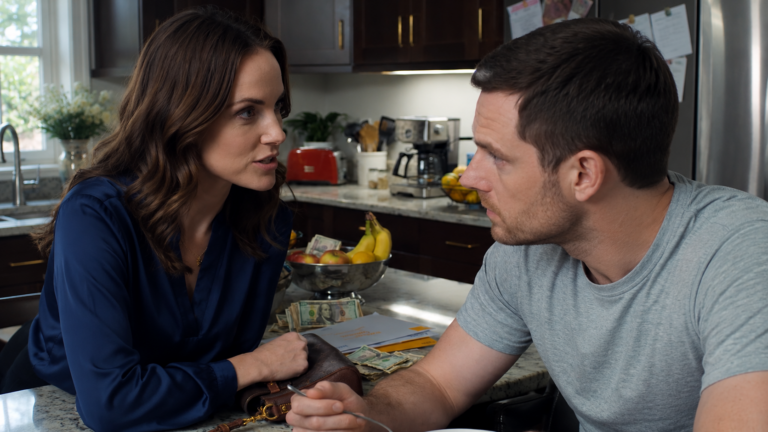
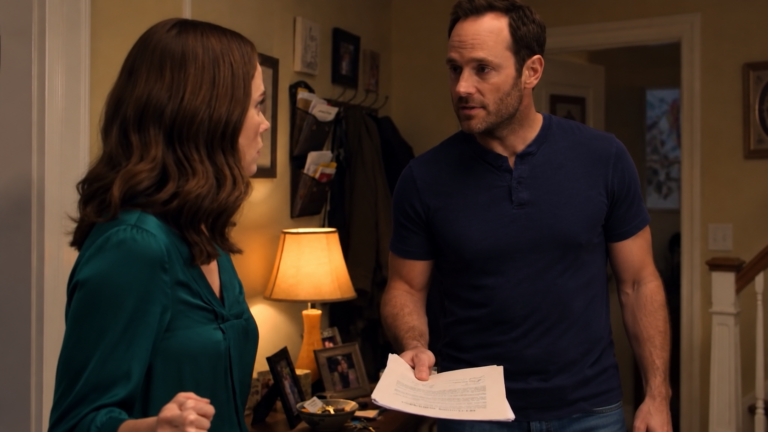
I read every page before signing.
In the past I might have trusted her to handle the documents because she enjoyed administrative details.
Now I preferred to understand agreements before attaching my name.
That habit did not come from believing everyone was dishonest.
It came from recognizing that informed consent required attention.
I returned the papers through my attorney and asked for confirmation of receipt.
Later I met my mother for a walk near the river.
She asked whether I had heard from Natalie recently.
I told her we had exchanged a few practical messages but nothing personal.
My mother said that sounded healthy.
We watched a family helping a child learn to ride a bicycle on a narrow path.
The father ran alongside until the child found balance, then slowed down and let go.
I thought of Evelyn learning to let Lucy decide how close she wanted her mother to stand.
I thought of my own effort to stop holding a marriage together after its foundation had failed.
Letting go did not always mean abandoning someone.
Sometimes it meant accepting that care could not replace another person’s choice.
CHAPTER 61: THE FINAL ACCOUNTING
The independent administrator completed a detailed review of the trust after months of examining original invoices and bank records.
The report identified expenditures that were properly documented, payments requiring adjustment, and transfers that lacked adequate support.
Some of the questions were resolved through recovered records.
Others required negotiated repayment and continued examination by authorities.
Lucy’s attorney presented the findings in a meeting where she could ask questions directly.
The administrator explained the limits of the report and what steps would protect future funds.
Lucy requested an electronic copy of every schedule and a paper summary she could keep at home.
She also asked that her monthly statements be sent to her without passing through a family member.
The administrator agreed.
Evelyn watched quietly as Lucy reviewed the numbers.
She no longer interrupted to ask whether the material was too difficult.
Lucy had shown repeatedly that difficulty was not the same as incapacity.
After the meeting, she said the most satisfying part was not the potential recovery of money.
It was being allowed to examine the full account herself.
For years, unexplained figures had been used as a reason she needed somebody else to make decisions.
Now the figures were finally something she could understand, question, and correct.
CHAPTER 62: NATALIE AT THE STATION
I encountered Natalie at the train station one rainy evening.