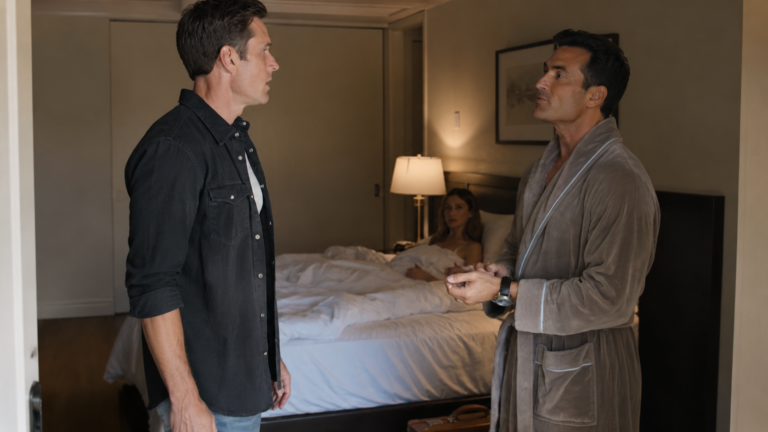
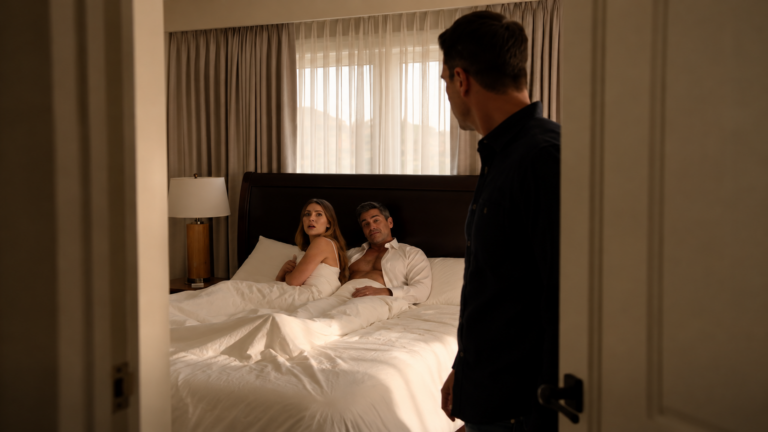
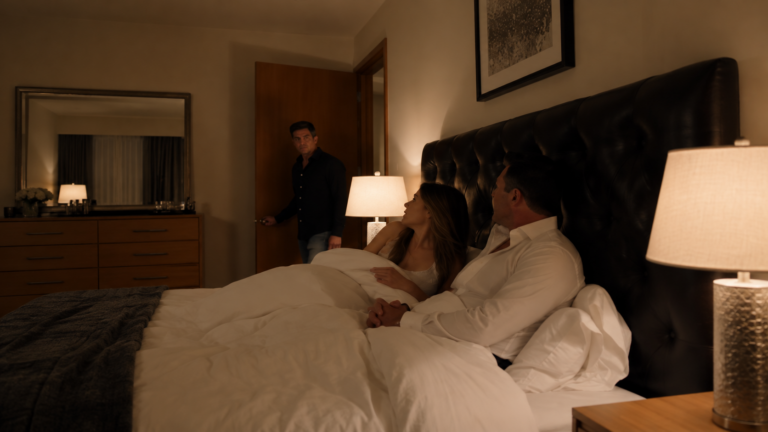
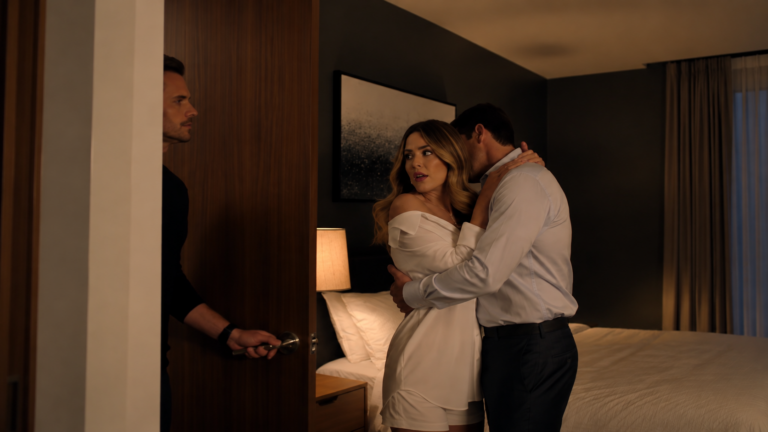
Then he moved.
CHAPTER 3: AN EMPTY PLACE AT THE TABLE
I put my wedding ring beside the kitchen sink, where it lay against a chipped blue mug Natalie had bought on our first anniversary.
Graham took a chair without waiting to be offered one.
Natalie sat opposite him, leaving the chair beside me empty.
Evelyn remained standing because she said she would rather be near the door.
Jonah filled a glass of water and set it on the table for her.
Nobody ate anything.
The leftover casserole I had brought home from my mother’s house cooled on the counter.
I asked Evelyn to begin with facts she could prove.
She told me that her daughter Lucinda Ellis was fifteen when she disappeared from a family medical facility in Pennsylvania.
There had been an automobile collision earlier that year, and Lucinda had suffered a concussion and a period of disorientation.
Graham told the family that complications had killed her during a transfer between clinics.
He handled the paperwork and arranged a private memorial, claiming a closed casket was required for medical reasons.
Evelyn had never seen a death certificate from the state.
She had accepted a letter on a clinic’s stationery, a letter now identified as having been produced by a company Graham controlled.
For years she had carried guilt like an injury nobody else could see.
Two months ago a postcard arrived at her office, addressed in handwriting she recognized immediately.
The card contained no signature.
It said only that somebody still remembered the lullaby she used to sing on the kitchen stairs.
Evelyn could not prove the sender was her daughter.
She could prove the postmark came from New Jersey.
Jonah met her after a coworker passed along a question about a resident named Lucy Ellison.
Lucy was now twenty-two, legally an adult, and receiving assistance for an old neurological injury.
She had recently begun questioning the story of her childhood.
“Why didn’t she just leave?” I asked.
Jonah answered without irritation.
“She did leave for a while, but people who control someone’s documents can make ordinary independence very difficult.”
Graham slapped the table.
“You’re telling him half of it.”
Evelyn looked at her husband with an expression more tired than angry.
“Then tell the other half.”
He said Lucinda had always been unstable.
He said moving her away had protected the family.
He said Evelyn had been too ill to make decisions.
He offered no dates, no doctor, and no explanation for the invented death notice.