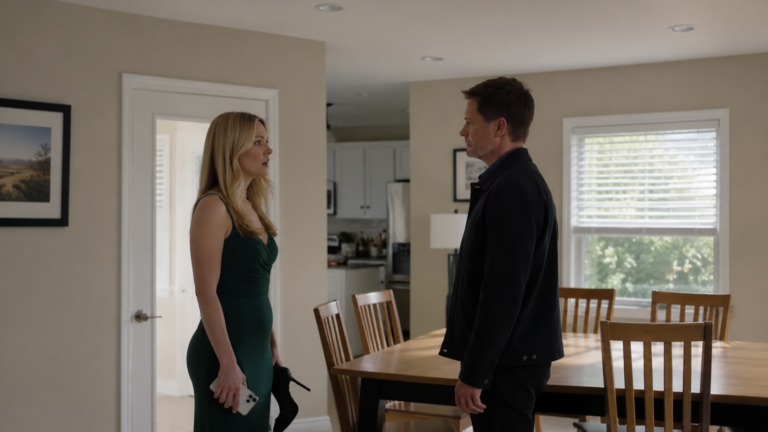
Paul ended the discussion shortly afterward.
As Daniel rose, he paused beside Mark’s chair.
He said Vanessa had always believed Mark was too stubborn to recognize a good opportunity.
Mark answered that Vanessa was entitled to her opinions, but Daniel was not entitled to his signature.
Daniel left without another word.
Rachel waited until the elevator doors closed before speaking.
She said the meeting had produced no settlement, but it had clarified that Daniel still wanted the lane badly enough to negotiate.
Mark asked whether that meant the project had no viable alternative.
Rachel said it suggested a problem, but they needed the engineering records before drawing conclusions.
THE ENGINEER’S WARNING
A civil engineer named Thomas Keene contacted Rachel the following week.
He had reviewed an early version of the redevelopment plan before leaving the consulting firm that prepared it.
Thomas explained that the vacant parcel sat above an old stormwater channel and had only one suitable entrance for heavy commercial vehicles.
The entrance was on the opposite side from Mark’s shop, but using it would require a costly redesign of the loading area.
The developer had initially accepted that expense.
Later, after Thomas raised concerns about drainage and turning clearance, the project manager asked him to examine a route through Mark’s lane.
Thomas had explained that the lane belonged to another owner and could not be included without a valid agreement.
He remembered the conversation because he had written a warning in the project notes.
Rachel asked whether the warning survived in the file.
Thomas produced a copy of the memorandum bearing his name and the date.
The memorandum stated that the preferred commercial access route depended on acquiring rights from the adjacent property owner.
It also warned that construction near the retaining wall would require a separate structural assessment.
Thomas said he had left the firm for unrelated reasons, but the revised site plan had troubled him when he later saw it in a public notice.
He did not know who changed the drawings or who approved the change.
He only knew that the property issue had been identified before the revised application was submitted.
Mark asked whether the proposed work could damage his shop.
Thomas answered that any excavation near the old wall would need careful engineering, especially because the buried conduit and drainage pipe were still in use.
He would not speculate about the likelihood of damage without a site inspection.
Mark appreciated the restraint.
After months of people speaking with certainty about things they had never examined, an expert willing to say what he did not know felt almost revolutionary.