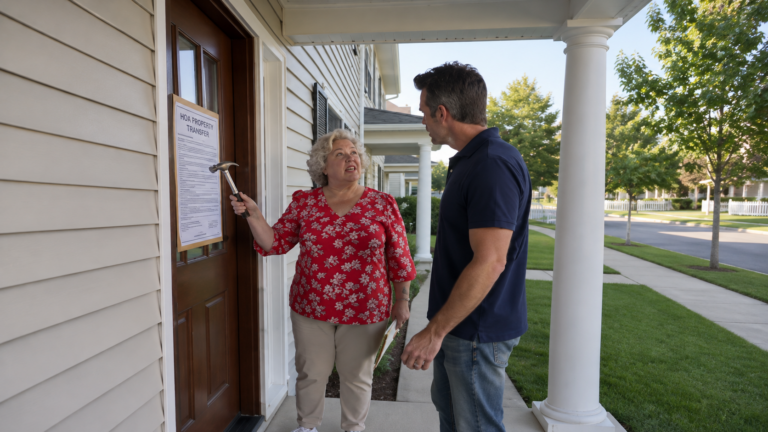
Walter felt resentment rise when she reduced six disputed grants to questions.
He kept his hands still.
Nina had asked him to let the homeowners speak before he presented the older subdivision records.
Evelyn approached the microphone and held up her own handwriting sample.
She explained that she had agreed to a volunteer drainage program, not a commercial easement.
Her voice shook at first, but she continued through the last sentence.
Sofia followed with her employment records and the signing date she disputed.
Miriam described the proposed entrance near the tree and the unauthorized site visit.
Theodore spoke about real estate calls that described the corridor as already approved.
George simply said he wanted the drainage fixed without giving away frontage rights he had never knowingly offered.
The planning officer asked whether the developer had verified the disputed easements.
Celeste acknowledged the dispute and confirmed that the company had paused reliance on those grants while legal questions were reviewed.
Her statement surprised some people in the audience.
Brenda looked down at her notes.
The engineer presented preliminary drainage findings and admitted that the grading study required further review.
Walter then spoke about the original seven lots and the absence of any recorded mandatory association covenant covering his house.
He referred to document numbers rather than making accusations against Brenda.
He also asked that the county distinguish necessary flood maintenance from a commercial access proposal.
When he finished, another resident from the newer subdivision rose.
Her name was Lisa Davenport, and she had previously supported Brenda.
Lisa said she still wanted jobs and a safer road, but she did not want those goals accomplished through documents people disputed signing.
She asked for a revised proposal with transparent access arrangements.
The room grew quiet.
Brenda had often portrayed opposition as a refusal to care about the neighborhood.
Lisa’s words made that framing harder to sustain.
The planning board postponed further consideration pending updated traffic and drainage studies and clearer documentation of legal access.
The decision did not invalidate the deeds.
It did not award damages or punish anyone.
It prevented the project from proceeding on the assumption that disputed rights were settled.
Outside the building Walter found Sofia sitting on a low stone wall, eating crackers from a packet.
She was exhausted but smiling.
“I didn’t think they’d listen,” she said.
“They listened because you gave them a question they had to answer,” Walter replied.