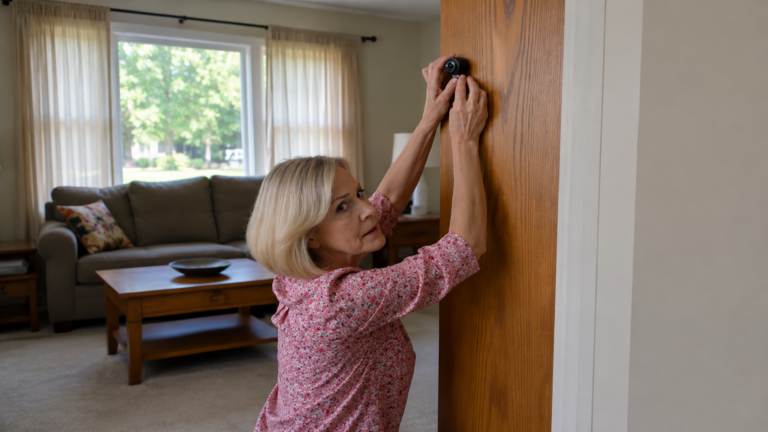
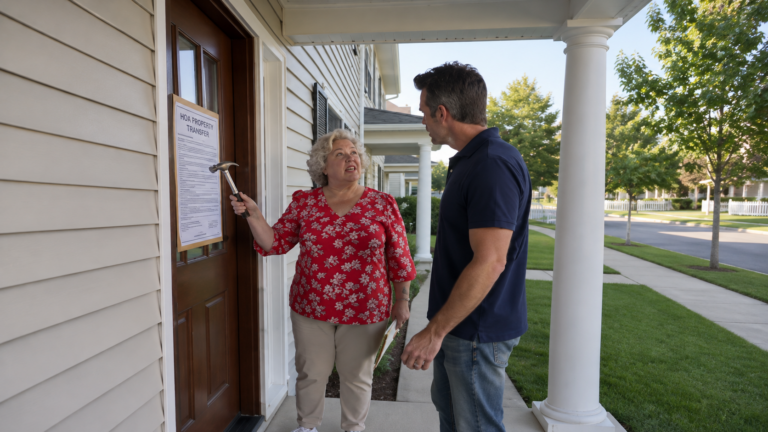
The fee came with a deadline and no explanation of what boundary had changed.
Across the lane, Miriam Stone had signed a landscaping consent but believed it authorized only one season of drainage maintenance.
Her recorded instrument claimed to grant access for forty years.
She read the clause aloud and shook her head.
“That is not what Brenda said.”
At the fourth house, Theodore Blake refused to speak until Walter showed him the document number on the recorder’s official website.
Theodore had distrusted neighbors since a contractor abandoned a roof repair and kept his deposit.
Once he saw his own name in the public record, he asked Walter to leave the copy on the porch.
He called back that evening and apologized.
“I thought you were selling me something,” he said.
“Brenda said the same people who questioned her were working for a land speculator.”
Walter assured him he was not representing a developer.
The fifth homeowner was Sofia Alvarez, who worked nights at a hospital and took care of her father during the day.
Her deed attributed her signature to a date when time sheets placed her at work for twelve continuous hours.
The sixth was George Finch, a seventy-nine-year-old former postal clerk who had trouble hearing but missed very little.
He recognized Brenda’s handwriting on a cover note and remembered a young man carrying the papers in a green briefcase.
He could not recall the man’s name.
“He smelled like fresh paint,” George said.
Walter did not understand the significance.
George explained that the man’s jacket sleeve bore a bright white stain near the cuff.
He thought the stain came from the community office, which had been repainted that month.
Walter wrote the detail down without assigning it meaning.
Six houses yielded six different accounts of pressure, confusion, and missing information.
All six owners disputed either the signature, the scope of the document, or the way consent had been obtained.
That did not mean every signature was necessarily forged.
It did mean the filings required independent scrutiny.
Walter arranged a meeting at the public library rather than at his home.
He wanted a neutral place where nobody would feel obliged to follow him simply because he had brought the documents.
Evelyn offered to call the neighbors who hesitated.
Sofia volunteered to compare the recorded dates with her work schedule.
Theodore suggested making an inventory of money paid to the association and to Glenway separately.