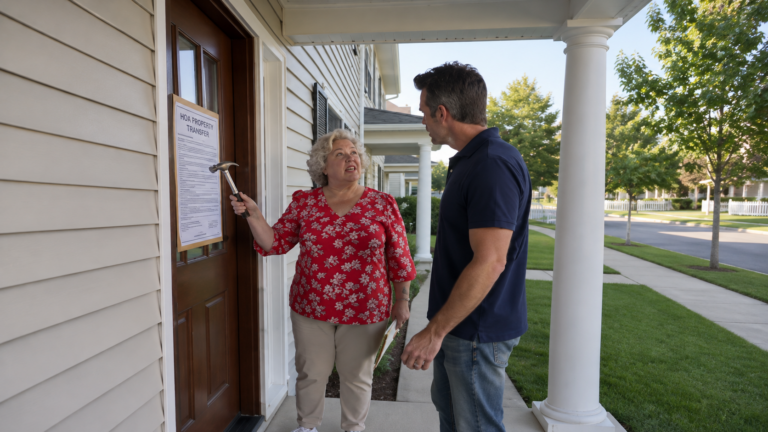
Brenda continued to insist the case was a political attack led by retired residents who disliked change.
Her supporters pointed out that she had not been convicted of anything.
That was true.
Walter said so when asked.
He also said that the unresolved criminal question did not make the recorded easements uncontested.
The civil challenge, the planning review, and any potential criminal inquiry were different processes.
Each had its own burden, timeline, and possible result.
That distinction became essential when local reporters started asking for interviews.
A young journalist wanted Walter to say that Brenda had stolen six houses.
Walter refused.
The deeds described easements and management rights, not outright transfers of ownership.
He would not exaggerate their contents even for a headline that might help his side.
The journalist returned with better questions and a clearer account.
Walter read the article at his kitchen table and recognized the small victory of accurate words.
The story was serious enough without turning it into something it was not.
The association called a special membership meeting after the independent accountant released a more detailed report.
The report documented missing approvals, inconsistent accounting classifications, and transfers that required explanation.
It recommended additional review by qualified professionals and clearer separation between ordinary association dues and any private development initiative.
Brenda disputed the conclusions and said the accountant had misunderstood the project.
A majority of the board nonetheless voted to suspend collection of contested fees until the records could be reconciled.
Martin Kroll resigned as secretary before the membership meeting.
He said he could no longer serve responsibly without confidence that the minutes reflected actual decisions.
The board accepted his resignation and thanked him for preserving the documentation needed to understand past votes.
Walter attended as a guest because his original lot’s membership status was not the same as that of the newer subdivision.
He did not vote.
The eligible members debated whether to remove Brenda from the presidency under their governing rules.
Some residents defended her years of volunteer service.
Others said dedication did not excuse withholding records or threatening homeowners.
Brenda spoke for herself and described the corridor as her legacy.
She argued that the neighborhood would lose a rare development opportunity if the board retreated.
One member asked why the governing documents required member approval for certain financial obligations.
Brenda answered that emergencies sometimes demanded quick action.
The member replied that the proposed delivery facility was not an emergency.