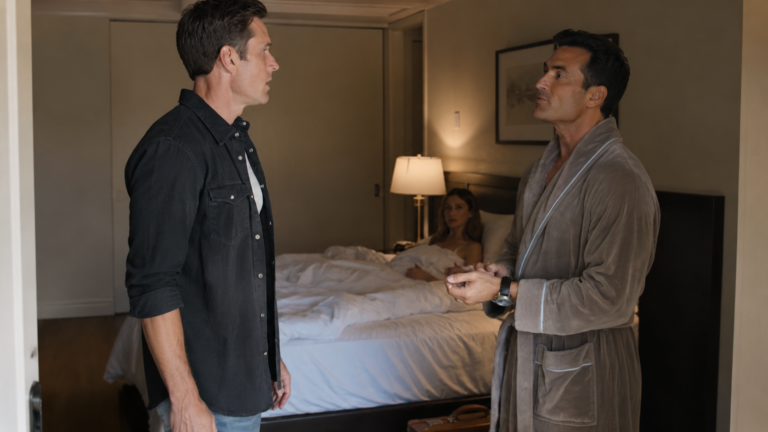
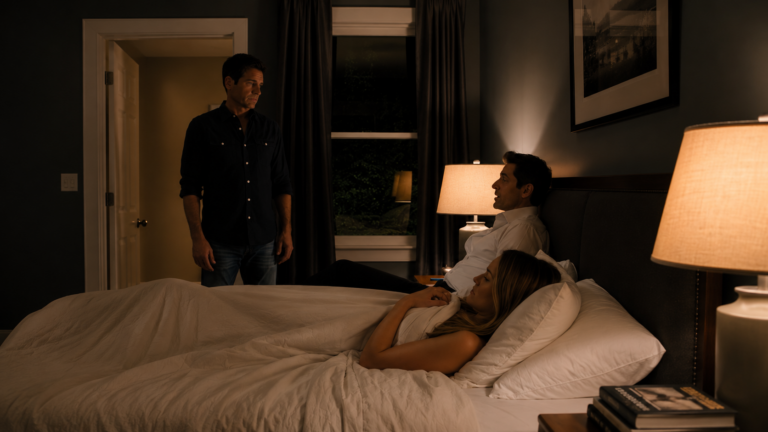
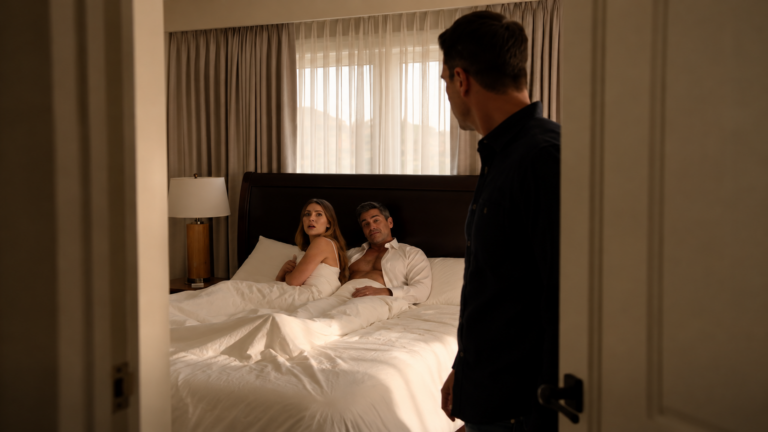
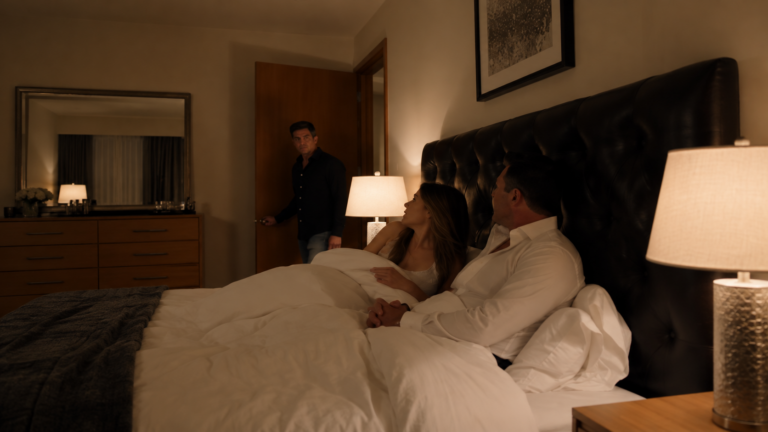
The counselor’s name was Dr. Nora Hayes.
Her office did not look clinical.
There were two armchairs, a small sofa, several plants, and a shelf filled with books that Ethan deliberately did not read the titles of.
He sat in one armchair.
Samantha sat in the other.
The empty sofa between them felt appropriate.
Nora began with one rule.
“This room is not a courtroom.”
Ethan almost smiled.
Samantha did not.
Nora looked at both of them.
“We can discuss facts.”
“We can discuss harm.”
“We can discuss responsibility.”
“But if either of you comes here only to win a verdict, therapy will be useless.”
Ethan nodded.
Samantha nodded too.
Nora turned toward Ethan first.
“Why are you here?”
Ethan had prepared an answer.
He abandoned it.
“I need to know whether I am trying to repair a marriage or delaying its funeral.”
Samantha flinched.
Nora did not.
“That is clear,” she said.
Then she looked at Samantha.
“Why are you here?”
Samantha took longer.
“I want to repair it.”
Nora waited.
Samantha looked at Ethan.
“And I need to learn whether wanting that is enough reason to ask him to try.”
Nora nodded.
“It is a reason.”
“It is not an entitlement.”
Samantha swallowed.
The first session lasted ninety minutes.
Nobody left feeling better.
That surprised Ethan.
He had assumed useful therapy would produce relief.
Instead, it produced precision.
Nora asked him what betrayal meant beyond sex.
Ethan listed the hotel, the lies, Dylan, the money, the home equity application, and the story Samantha told his mother.
Nora stopped him.
“You are naming events.”
“What did those events take from you?”
Ethan stared at the floor.
He had not expected the question to be difficult.
“Confidence in my own memory,” he finally said.
Samantha looked at him.
Ethan continued.
“I keep replaying old conversations and asking whether they meant what I thought they meant.”
“I question good days now.”
“I question her kindness.”
“I question my judgment.”
“I run a company that gets hired when people miss warning signs.”
“I keep wondering how I missed mine.”
Nora leaned slightly forward.
“Do you believe Samantha’s deception proves you were foolish?”
“Sometimes.”
“Why?”
“Because I trusted her.”
Nora shook her head.
“Trust is not evidence of stupidity.”
“It is a condition of intimacy.”
“If you had monitored her phone, tracked every dollar daily, and questioned every friendship, you might have discovered the deception sooner.”
“You also would not have had a healthy marriage before the deception.”
Ethan looked at Samantha.
She was crying silently.
Nora turned to her.